How to Start Strength Training: A Simple Beginner's Guide
By Vital Muscles · 2026-10-22 · 3 min read
Sources checked by the Vital Muscles editorial team on 2026-10-16. How we check
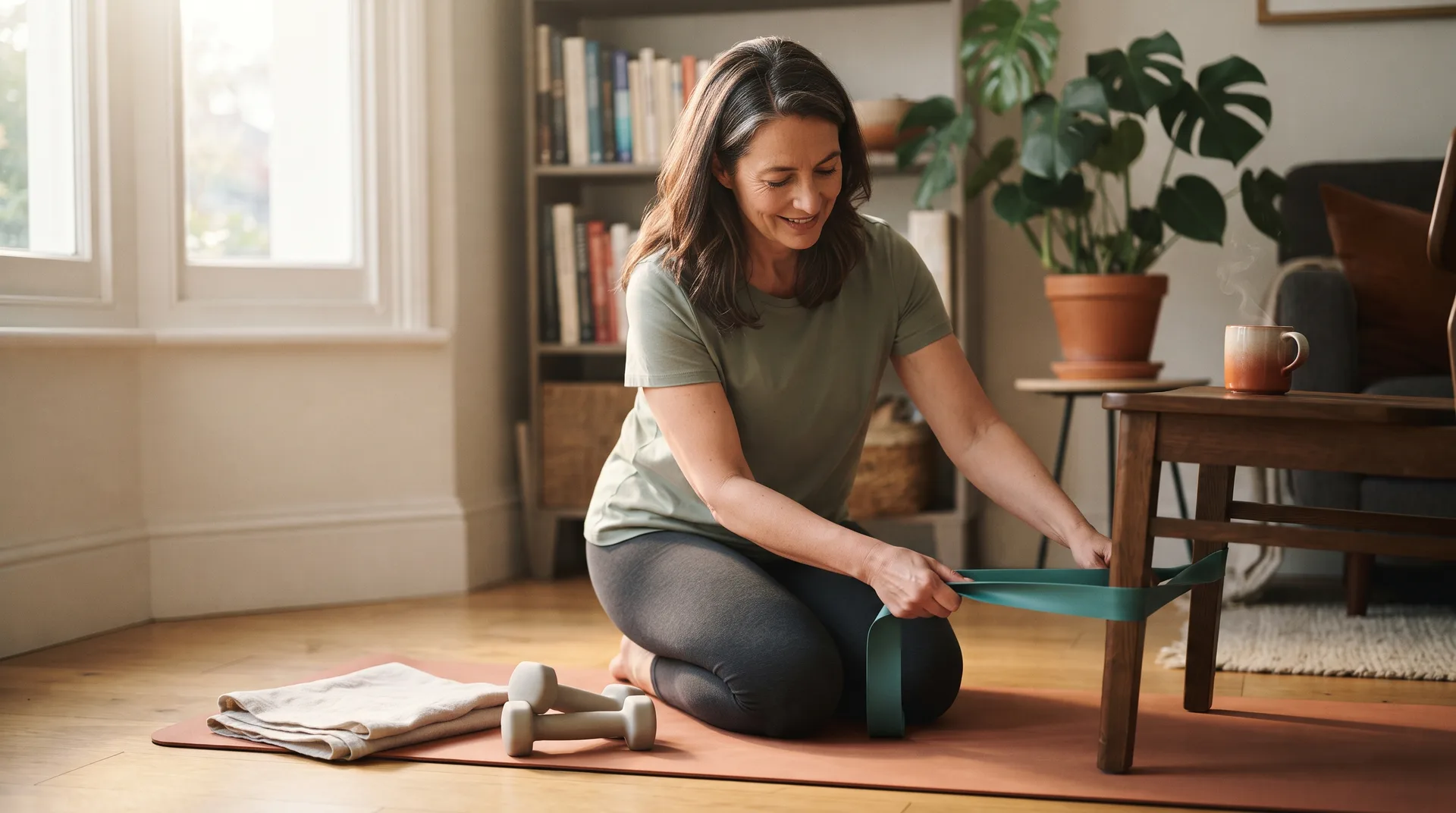
You don't need a gym, fancy equipment or experience to start strength training. You need a few simple exercises, a plan to build up slowly and a little patience. Here is how to begin.
The short version
- Aim for strength exercises on at least 2 days a week, working all the big muscle groups.1
- Start low and go slow: begin easy and add a little more over time.2
- Do about 8 to 12 repetitions of each exercise, enough that one more would be hard.3
Check in first, if you need to
Most healthy adults can start without seeing a doctor first. If you have a health condition or symptoms, talk to a doctor or other health professional about what is right for you.2
Check with your doctor first if…
You have a medical condition (such as heart disease, high blood pressure, diabetes, osteoporosis or joint problems), are pregnant, take regular medication, have chest pain or dizziness during activity, or have been inactive for a long time. A doctor or physical therapist can help you choose a safe starting point.

What counts as strength training?
Anything that makes your muscles work against resistance. For example:3
- Resistance bands, hand-held weights or weight machines
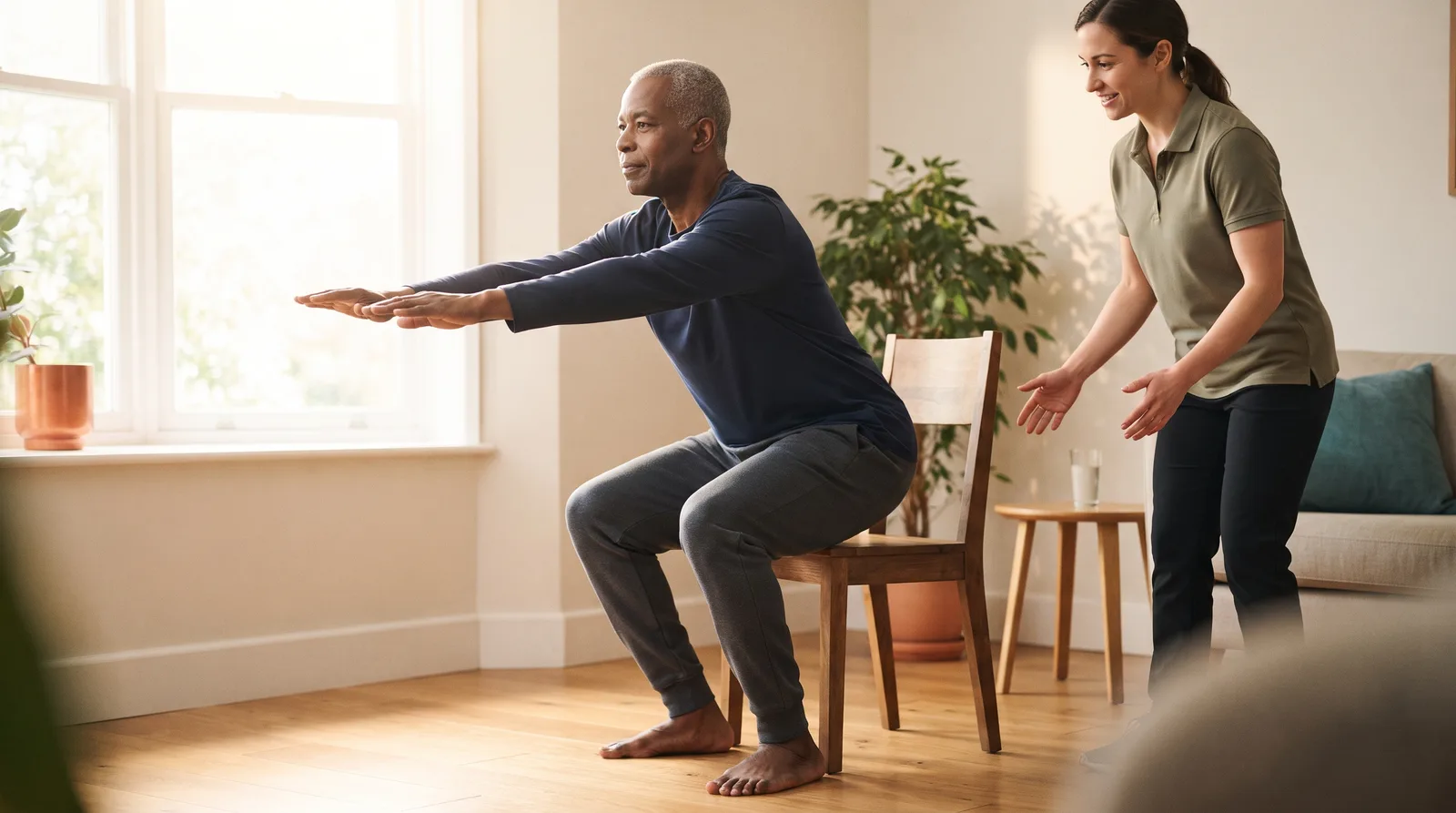
- Your own body weight: squats, lunges, push-ups, planks, leg raises
- Carrying heavy things, such as groceries
- Gardening that involves digging and lifting
A simple way to begin
- Pick a few exercises that together cover your legs, hips, back, chest, shoulders, arms and belly.1
- Start with no weights or very light ones, until the movements feel comfortable.3
- Do 8 to 12 repetitions of each. That is one set. One set is a good start, and more sets can help more later.3
- Choose an effort that is challenging. The last repetition should feel hard, but your form should stay good.3
- Rest a day before working the same muscles again.3
When to do more
Build up in small steps. You can add time, effort or days over the weeks.2 When the exercise starts to feel easy, make it a little harder by using a heavier weight or a stronger band.
Stay safe
- Listen to your body. Doing too much can leave you exhausted, with sore joints or muscle pain, or even hurt.3
- Warm up by doing the exercise with less weight first.3
- Keep breathing. Breathe out as you push or lift, and in as you relax.3
- Don't lock your joints straight on your arms and legs.3
- Ask for help if you're unsure. A doctor or physical therapist can answer questions. A session or two with a trainer, or a group class, can teach you good form.3
Quick questions
Do I need a gym?
No. Bands, light weights and body-weight exercises all count.3
How many days should I do it?
At least 2 days a week.1
Can I do it every day?
Give the same muscles a day off between sessions so they can recover.3
The bottom line
Start small: 2 days a week, a few simple exercises, 8 to 12 repetitions each, and a day of rest between sessions for the same muscles. Add a little more as it gets easier. Why it is worth it is in Benefits of Strength Training: What the Research Shows.

The images in this article were created with AI tools to illustrate concepts. They are not exact anatomical depictions or scientific evidence.
Be the first to like this · 1 read
References
- Centers for Disease Control and Prevention. Physical Activity Guidelines for Adults. Physical Activity Basics. Page dated December 20, 2023.
- Piercy KL, Troiano RP, Ballard RM, et al. The Physical Activity Guidelines for Americans. JAMA. 2018;320(19):2020–2028. doi:10.1001/jama.2018.14854 (author manuscript: PMC9582631)
- National Institute on Aging (NIA), National Institutes of Health. Three Types of Exercise Can Improve Your Health and Physical Ability. Content reviewed January 14, 2025.
Related articles

How Much Exercise Do You Need? A Simple Guide
A plain-language answer to how much exercise adults need each week, what counts as moderate or hard, and how to fit it into real life.
Oct 20, 2026 · 3 min readRead →

Why Is Exercise Important? A Simple Guide
Exercise helps your heart, brain, mood, sleep and strength. A plain-language guide to what it does for you and how little it takes to start.
Oct 16, 2026 · 3 min readRead →
Why Exercise Matters: What the Evidence Says
Regular exercise lowers the risk of heart disease, diabetes and some cancers and helps mood and sleep. Here is what U.S. guidelines and research say.
Oct 16, 2026 · 6 min readRead →