Why Exercise Matters: What the Evidence Says
By Vital Muscles · 2026-10-16 · 6 min read
Sources checked by the Vital Muscles editorial team on 2026-10-17. How we check
This is the detailed version, with numbers and study details. Prefer the plain-language overview? Read the simple guide: Why Is Exercise Important? A Simple Guide
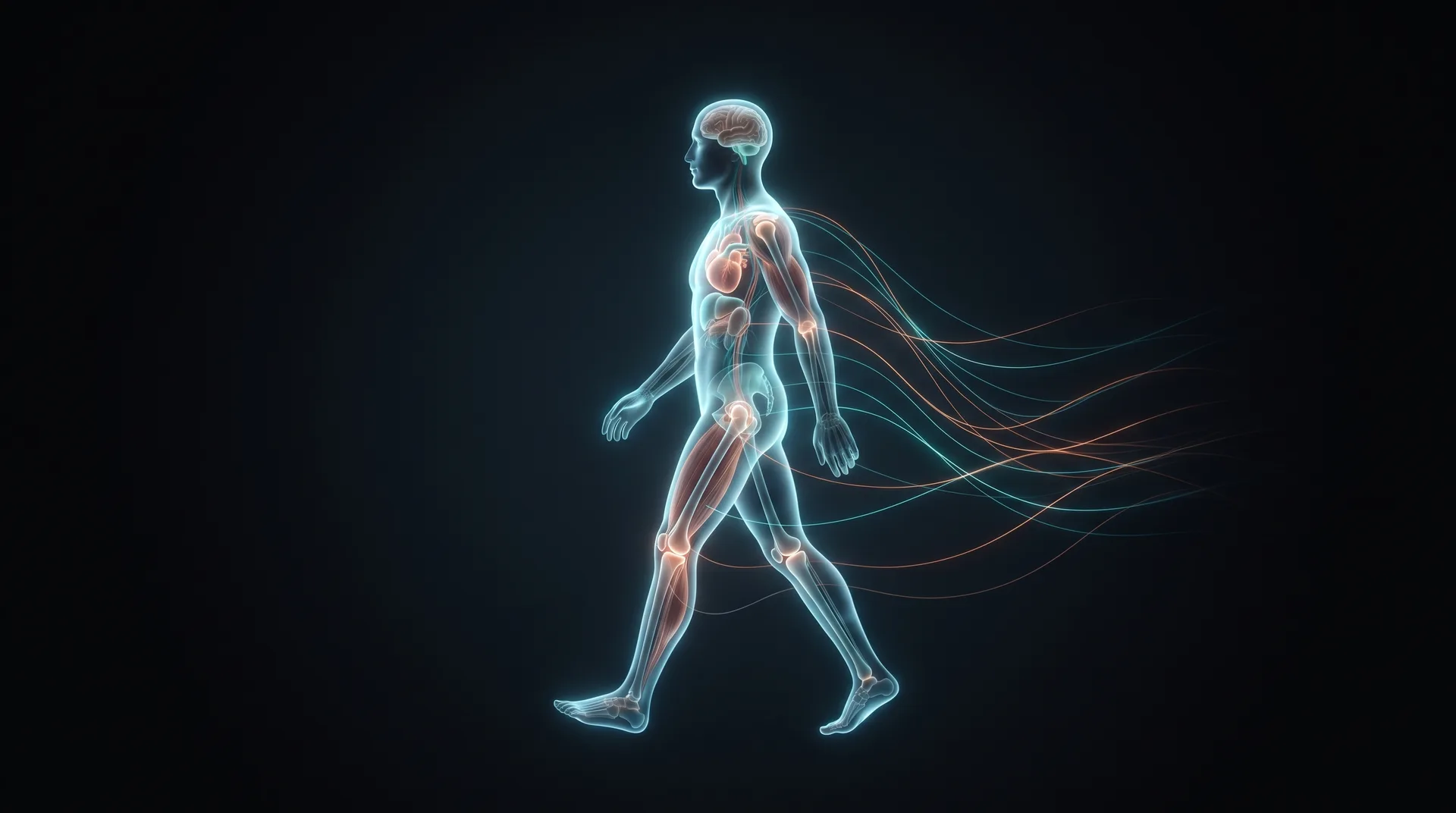
Exercise is often framed as a way to change how you look. The research points to something bigger: regular physical activity affects how your body and brain work — starting with your next workout and continuing for decades.
Key takeaways
- Some benefits begin quickly: physical activity may lower anxiety and blood pressure and improve sleep and insulin sensitivity soon after you start.1
- Over the long term, regular activity lowers the risk of heart disease, stroke, type 2 diabetes, dementia, depression and several cancers.1
- U.S. guidelines for adults: 150–300 minutes a week of moderate aerobic activity plus muscle-strengthening on at least 2 days — and any amount is better than none.2
What exercise does right away
You don't have to wait years to notice a difference. The U.S. Physical Activity Guidelines say that activity may quickly reduce anxiety and blood pressure and improve sleep quality and insulin sensitivity.1 The CDC sums it up this way: physical activity helps you feel better, function better and sleep better, and a session of moderate-to-vigorous activity can bring brain benefits, including less short-term anxiety.3
What it does over the years
The guidelines also describe what consistent activity does over time. In adults, it:
- Protects your heart and circulation. Lowers the risk of heart disease, stroke and high blood pressure.1 The CDC adds that at least 150 minutes a week of moderate activity can lower blood pressure and improve cholesterol.3
- Lowers the risk of type 2 diabetes and metabolic syndrome, with some benefit possible at less than 150 minutes a week.3
- Lowers the risk of eight types of cancer — bladder, breast, colon, endometrium, esophagus, kidney, stomach and lung.1
- Supports your brain and mood. Lowers the risk of dementia (including Alzheimer's disease) and depression,1 and helps keep thinking, learning and judgment sharp with age.3
- Keeps you strong and steady. Improves bone health, physical function and quality of life,1 lowers the risk of falls and fall-related injuries in older adults,1 and lowers the risk of hip fracture.3
What “lowers the risk” means
These are findings about groups of people. Being active lowers your chances of developing these conditions; it does not guarantee that you won't. Many of the long-term findings come from large observational studies, which show consistent associations rather than proving cause and effect in each person.
You don't need to be perfect: some is better than none
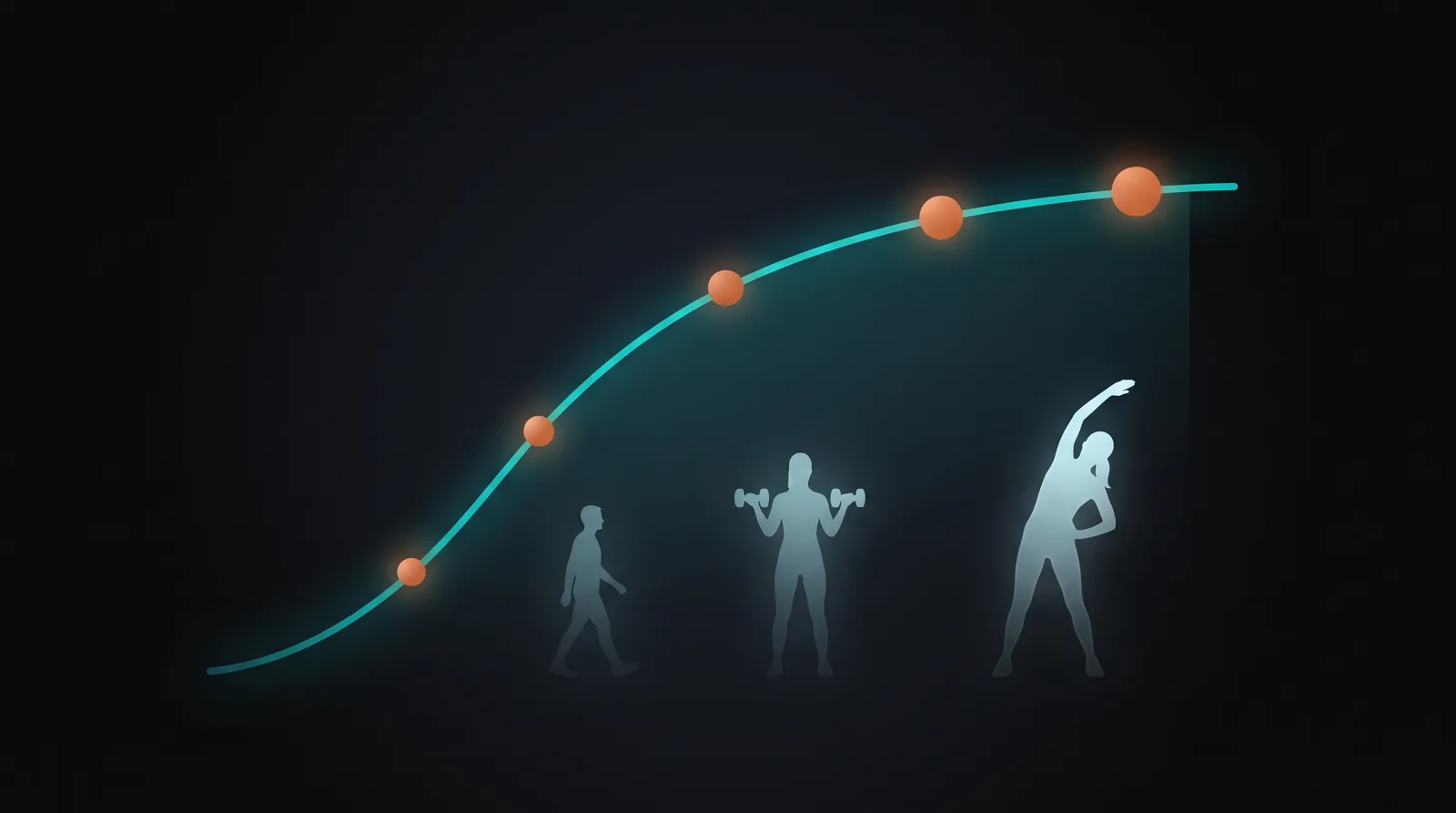
One of the clearest messages in the guidelines is that any amount of physical activity has some health benefit — and that the least active people gain the most from even modest increases.1,2
A pooled analysis of several large cohort studies looked at leisure-time activity and the risk of dying during follow-up. Compared with people who did no leisure-time activity:4
| Activity level (relative to the recommended minimum) | Lower risk of death |
|---|---|
| Less than the minimum | About 20% |
| 1 to 2 times the minimum | About 31% |
| 2 to 3 times the minimum | About 37% |
| 3 to 5 times the minimum | About 39% |
The recommended minimum in that study is roughly equivalent to 150 minutes of moderate activity per week. The authors found that the benefit leveled off at about 3 to 5 times the minimum, and they found no evidence of harm even at 10 times the minimum or more.4 Because activity was self-reported and the studies were observational, these figures show associations, not guarantees.
A U.S. study estimated that if adults aged 40 and older added just 10 minutes a day of moderate-to-vigorous activity, about 111,000 deaths a year (roughly 7% of annual deaths) could be prevented — assuming the associations seen in the data are causal.5
Strength training counts too
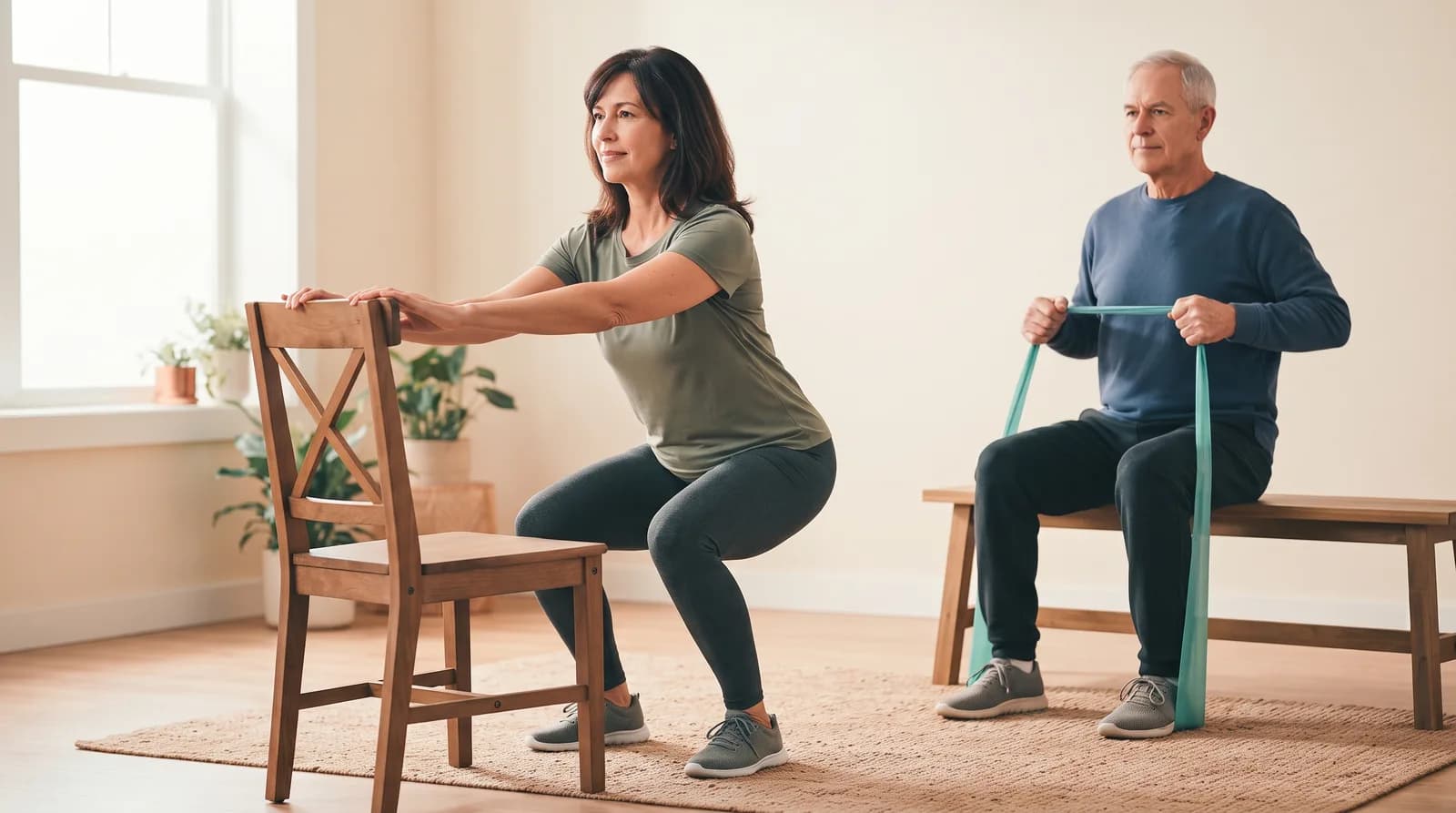
The guidelines treat muscle-strengthening as its own recommendation, on top of aerobic activity.2 According to the CDC, it can help adults increase or maintain muscle mass and strength, and it helps protect bones, joints and muscles as people age.3 We explain why muscle matters so much in Muscle Is an Organ: What It Needs to Survive and what happens when it declines in What Is Sarcopenia?.
How much do adults need?
| Type | What the guidelines say |
|---|---|
| Aerobic activity | 150–300 minutes a week of moderate intensity (such as brisk walking), or 75–150 minutes of vigorous intensity, or an equivalent mix2,6,7 |
| Muscle-strengthening | Activities for all major muscle groups on at least 2 days a week2,7 |
| Sitting | Move more and sit less1 |
The second edition of the U.S. guidelines dropped the old requirement that activity be done in bouts of at least 10 minutes, so shorter bouts spread through the day count.1 You can also split your time across the week — for example, 30 minutes a day on 5 days.7
What exercise can't do on its own
Exercise helps with weight management alongside your eating pattern. The CDC notes that maintaining weight may take about 150 minutes a week of moderate activity, though needs vary, and that losing weight and keeping it off typically requires a high amount of activity unless you also change what you eat.3 Exercise is also not a substitute for medical care.
Move more, sit less
The first key guideline for adults is to “move more and sit less.” Higher amounts of sedentary time are strongly linked to a greater risk of heart disease, high blood pressure and death from any cause, and all physical activity — especially moderate-to-vigorous activity — can help offset that risk.1 The WHO also recommends reducing sedentary behavior, though it found the evidence insufficient to set a specific time limit.6
How to start
Because any amount helps and short bouts count,1 you can begin with what you can manage and build up. Pick activities you can repeat, add muscle-strengthening on two days a week, and look for chances to stand and move during the day.
Check with your doctor first if…
You have a medical condition (such as heart disease, diabetes or kidney disease), are pregnant, have chest pain or dizziness during activity, or have been inactive for a long time. A doctor or other qualified professional can help you choose a safe starting point.
Frequently asked questions
Is walking enough?
Brisk walking counts as moderate-intensity aerobic activity.7 The guidelines also call for muscle-strengthening on at least 2 days a week, which walking alone doesn't provide.2
Do short workouts count?
Yes. The current U.S. guidelines count shorter bouts toward your weekly total.1
What if I can't reach 150 minutes a week?
Some activity is better than none, and the biggest gains are seen when the least active people do a little more.1,2,4
Can exercise help my mood?
Regular activity can reduce the risk of depression and anxiety, according to the CDC.3 The guidelines also note that physical activity can help ease symptoms of anxiety and depression in people who have them.1
The bottom line
Exercise is one of the most broadly beneficial things most adults can do for their health. You don't need perfection or a gym: start where you are, aim for the guideline amounts over time, include strength training, and remember that something is always better than nothing.

The images in this article were created with AI tools to illustrate concepts. They are not exact anatomical depictions or scientific evidence.
Be the first to like this
References
- Office of Disease Prevention and Health Promotion (ODPHP), U.S. Department of Health and Human Services. Top 10 Things to Know About the Second Edition of the Physical Activity Guidelines for Americans. Content last updated November 19, 2025.
- Piercy KL, Troiano RP, Ballard RM, et al. The Physical Activity Guidelines for Americans. JAMA. 2018;320(19):2020–2028. doi:10.1001/jama.2018.14854
- Centers for Disease Control and Prevention. Benefits of Physical Activity. Physical Activity Basics. Page dated December 4, 2025.
- Arem H, Moore SC, Patel A, et al. Leisure time physical activity and mortality: a detailed pooled analysis of the dose-response relationship. JAMA Intern Med. 2015;175(6):959–967. doi:10.1001/jamainternmed.2015.0533
- Saint-Maurice PF, Graubard BI, Troiano RP, et al. Estimated number of deaths prevented through increased physical activity among US adults. JAMA Intern Med. 2022;182(3):349–352. doi:10.1001/jamainternmed.2021.7755
- Bull FC, Al-Ansari SS, Biddle S, et al. World Health Organization 2020 guidelines on physical activity and sedentary behaviour. Br J Sports Med. 2020;54(24):1451–1462. doi:10.1136/bjsports-2020-102955
- Centers for Disease Control and Prevention. Physical Activity Guidelines for Adults. Physical Activity Basics. Page dated December 20, 2023.
Related articles
How Much Exercise Do You Need? A Simple Guide
A plain-language answer to how much exercise adults need each week, what counts as moderate or hard, and how to fit it into real life.
Oct 20, 2026 · 3 min readRead →
How to Start Strength Training: A Simple Beginner's Guide
New to strength training? A plain-language guide to how often, how many reps and how to start safely, using simple exercises at home.
Oct 22, 2026 · 3 min readRead →