What Is Sarcopenia? Muscle Loss, Strength and Diagnosis
By Vital Muscles · 2026-10-16 · 8 min read
Sources checked by the Vital Muscles editorial team on 2026-10-17. How we check
This is the detailed version, with numbers and study details. Prefer the plain-language overview? Read the simple guide: Losing Muscle as You Age: A Simple Guide to Sarcopenia
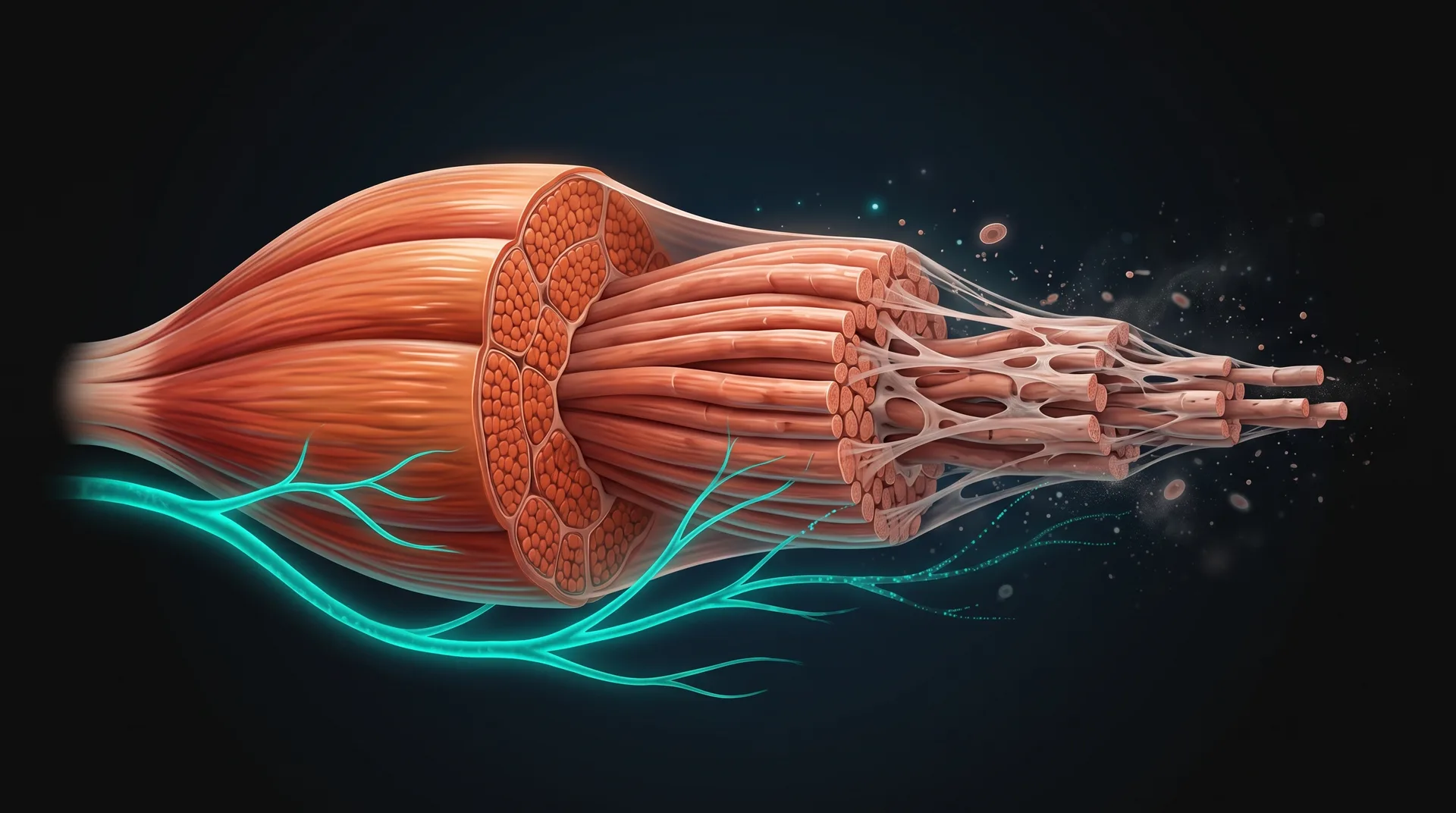
It's easy to assume that getting weaker is simply part of getting older. But when muscle loss and weakness cross a certain point, clinicians have a name for it — sarcopenia — and a way to measure it.
Key takeaways
- Sarcopenia is a muscle disease defined first by low muscle strength, then confirmed by low muscle quantity or quality.1
- Strength tends to decline faster than muscle mass: in studies that measured both in the same people, 2 to 5 times faster.2
- Clinical guidelines strongly recommend resistance exercise as the main treatment.3
Sarcopenia in plain English
The European consensus on sarcopenia (known as EWGSOP2) puts low muscle strength first. If strength is low, sarcopenia is considered probable. If tests also show low muscle quantity or quality, it is confirmed. If physical performance is low as well, it is classified as severe.1
In the United States, sarcopenia has had its own diagnosis code (ICD-10-CM M62.84) since 2016.4
Doctors also distinguish two types. Primary sarcopenia is age-related, with no other specific cause. Secondary sarcopenia involves other factors, such as a systemic disease, physical inactivity, or low energy or protein intake. The consensus notes that sarcopenia is common in older adults but can also occur earlier in life.1
Myopenia, dynapenia, sarcopenia: three words, three problems
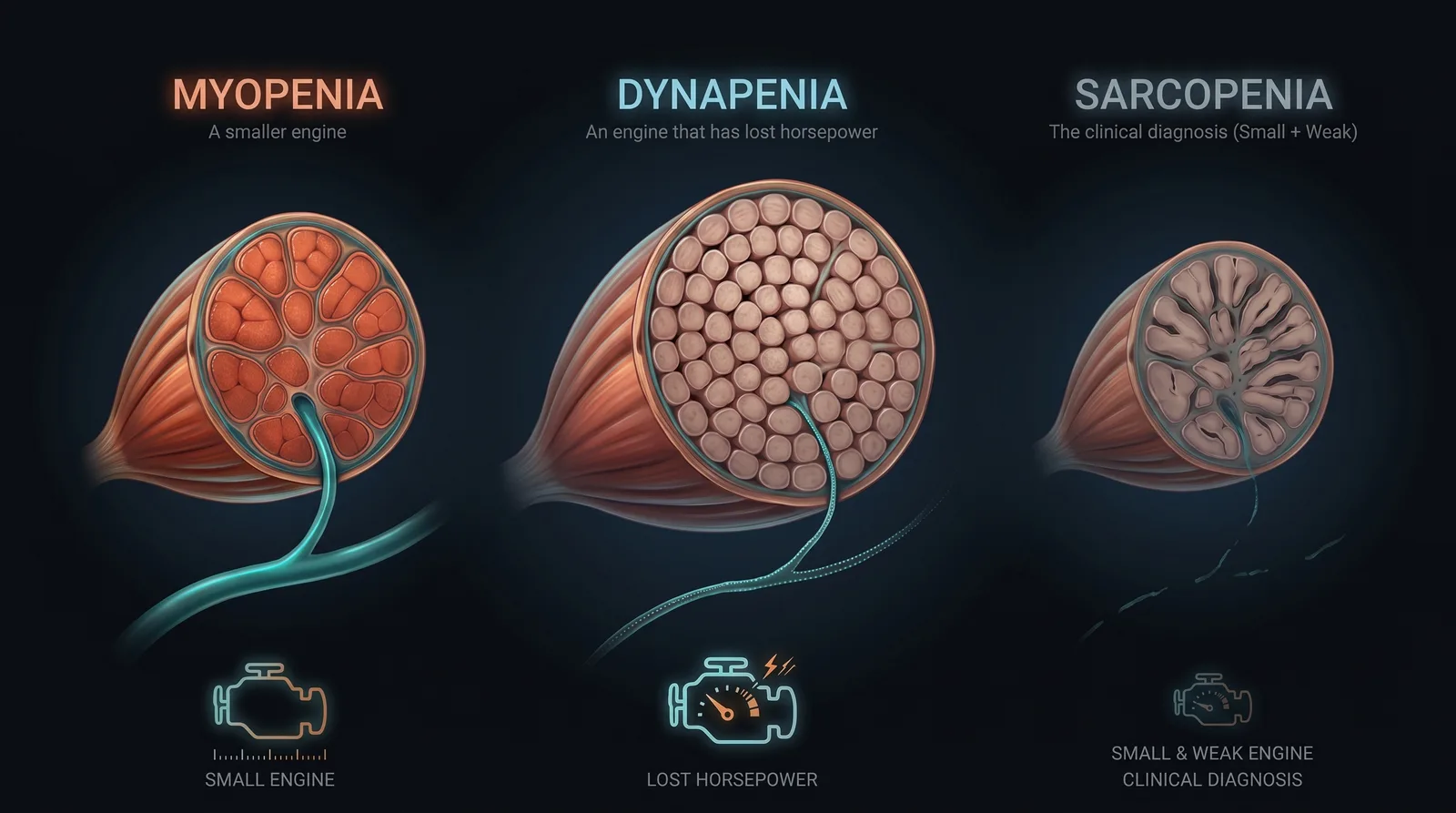
Researchers use several terms that are easy to mix up. A car analogy helps:
- Myopenia — a smaller engine. A clinically meaningful loss of muscle mass from any cause, at any age — for example, during a serious illness.5
- Dynapenia — an engine that has lost horsepower. A term proposed in 2008 for the age-related loss of strength. Its authors argued that weakness isn't explained by lost muscle alone, and suggested that changes in how muscle contracts and in nervous-system function deserve more attention.6
- Sarcopenia — the clinical diagnosis. Low strength together with low muscle quantity or quality.1
| Term | What is reduced | Typical context |
|---|---|---|
| Myopenia | Muscle mass | Any age, any illness |
| Dynapenia | Muscle strength | Aging |
| Sarcopenia | Strength, plus muscle quantity or quality (and physical performance when severe) | Mostly older adults; primary or secondary |
Strength falls faster than muscle
A quantitative review of the research found that, in studies measuring both in the same people, strength declined 2 to 5 times faster than muscle mass. Its authors concluded that loss of strength is a more consistent predictor of disability and death than loss of muscle mass.2
The exact rates depend on the age group and the method. Comparisons of younger and older adults suggest muscle mass falls roughly 0.4–0.5% per year. Longitudinal studies of people around age 75 report about 0.6–1% per year for muscle mass and roughly 2.5–4% per year for strength.2 Another overview put muscle loss at about 1–2% per year after age 50, with strength falling about 1.5% per year between ages 50 and 60 and about 3% per year after that.7
About the numbers you may see online
You may come across claims such as "you lose 8% of your muscle every decade after 40, and 15% after 70." We could not trace those exact figures to a primary study, and published estimates vary with the method, the age group and sex. The ranges above are the ones we could verify.
How common is it?
Estimates depend heavily on which definition is used. A 2022 meta-analysis found sarcopenia in roughly 10% to 27% of adults aged 60 and older, depending on the classification and cut-off, and severe sarcopenia in about 2% to 9% across studies.8
Why it matters
A systematic review of 17 studies using the European definition found that people with sarcopenia had higher odds of dying (pooled odds ratio of about 3.6) and of functional decline (pooled odds ratio of about 3.0). Both studies that looked at falls found an association.9 These are observational links: they show that sarcopenia is a marker of risk, not that it is the only cause.
How doctors diagnose it
There is no single test. A typical path:
- Screening. The SARC-F is a five-question questionnaire about difficulty with strength, walking, rising from a chair, climbing stairs and falls. It misses some cases but is very specific, so it mainly flags more severe ones.1 Clinical guidelines also suggest rapid screening with gait speed or SARC-F.3
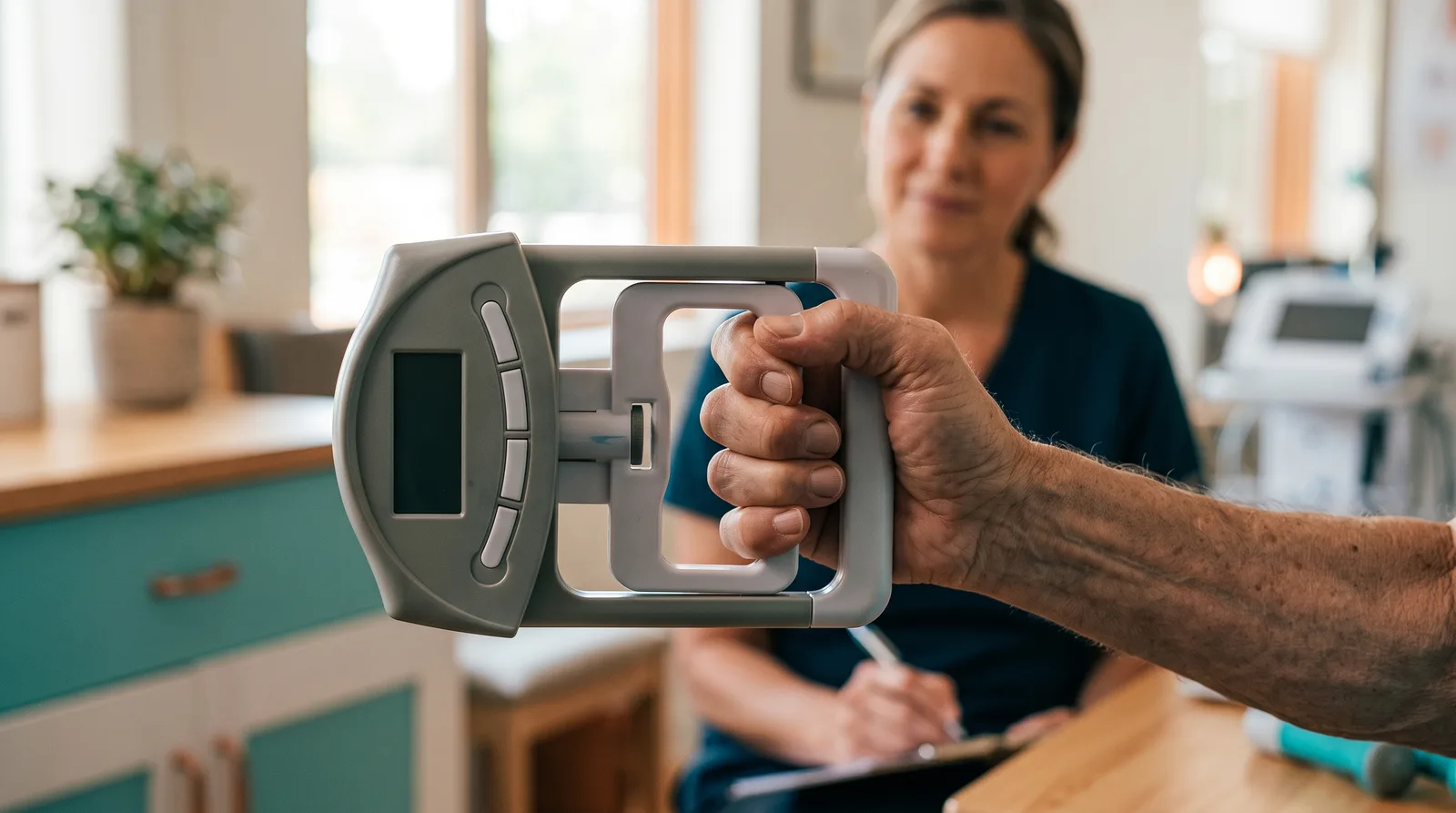
- Strength. Grip strength measured with a handheld dynamometer is advised for routine use; the chair stand test is a convenient proxy for leg strength.1
- Muscle quantity. DXA or bioelectrical impedance (BIA). CT and MRI are the gold standards but are rarely used in primary care.1
- Physical performance. Gait speed, used to grade severity.1
Two sets of cut-off points are widely used. EWGSOP2 is the European consensus. The FNIH Sarcopenia Project is a U.S.-based effort that proposed its own thresholds for weakness and low lean mass. Approximate U.S. equivalents are in parentheses:
| Measure | EWGSOP2 (Europe) | FNIH Sarcopenia Project (U.S.) |
|---|---|---|
| Grip strength, "weak" | Men under 27 kg (about 60 lb); women under 16 kg (about 35 lb) | Men under 26 kg (about 57 lb); women under 16 kg (about 35 lb)10,11 |
| Appendicular muscle mass, "low" | Men under 20 kg (about 44 lb); women under 15 kg (about 33 lb) | Men under 19.75 kg (about 44 lb); women under 15.02 kg (about 33 lb)12 |
| Muscle mass relative to body size | Appendicular mass ÷ height²: men under 7.0 kg/m²; women under 5.5 kg/m² | Appendicular mass ÷ BMI: men under 0.789; women under 0.51210 |
| Chair stand | More than 15 seconds to complete five rises | — |
| Gait speed (severe) | 0.8 m/s or slower (about 1.8 mph) | — |
Where a cell shows —, that measure is not covered in the sources we read. The two systems give nearly identical thresholds for grip strength and for appendicular muscle mass, but they express muscle mass relative to body size differently. The FNIH authors recommended that their cut-points be evaluated in other populations.10
These thresholds are for understanding how the diagnosis works, not for self-diagnosis. Only a clinician can interpret the results.
What helps
International clinical guidelines strongly recommend resistance-based exercise as the main treatment for sarcopenia. They give a weaker, conditional recommendation for protein supplementation or a protein-rich diet, make no recommendation for vitamin D or anabolic hormones, and judge the evidence for other options insufficient.3
A Cochrane review of 121 trials with about 6,700 older adults (its searches ran through 2008) found that resistance training had a large effect on muscle strength, a small but significant improvement in physical function, and a moderate to large improvement in getting out of a chair. In most trials, people trained two to three times per week at high intensity. Adverse events were poorly recorded: joint pain and muscle soreness were reported in many studies that tracked them, and serious events were rare.13
A practical starting point:
- Do muscle-strengthening activity on at least two days per week, involving all major muscle groups — the baseline in the U.S. Physical Activity Guidelines.14
- Check your protein. For adults over 65, the PROT-AGE expert group recommends at least about 0.45–0.55 g of protein per pound of body weight per day (1.0–1.2 g per kilogram). For a 180-pound adult, that is roughly 3 to 3.5 oz (80–100 g) of protein a day — the protein itself, not the weight of the food.15 We explain the numbers in Muscle Is an Organ: What It Needs to Survive.
When to talk to a doctor
Trouble rising from a chair, difficulty climbing stairs, slower walking, a weaker grip or a fall are the kinds of changes that screening questions ask about.1 If you notice them, mention them to your doctor. People with kidney disease should check with their doctor or a registered dietitian before increasing protein.15
Frequently asked questions
Is sarcopenia the same as normal aging?
No. Muscle mass and strength tend to decline with age, but sarcopenia is the point at which low strength and low muscle quantity or quality are measurable and meet diagnostic criteria.1
Can young people get sarcopenia?
It is most common in older adults but can also occur earlier in life, particularly when there is disease, inactivity or poor nutrition (secondary sarcopenia).1
What is the best exercise for sarcopenia?
Guidelines strongly recommend resistance-based exercise.3 The U.S. baseline is muscle-strengthening activity on at least two days per week.14 These sources don't prescribe one specific program, so a qualified professional can help tailor one to your health and experience.
Do I need supplements?
The international guidelines make a conditional recommendation for protein supplementation or a protein-rich diet, and no recommendation for vitamin D or anabolic hormones.3
The bottom line
Sarcopenia is not just "getting old." It is a measurable condition defined mainly by low strength, and strength tends to fall faster than muscle size. The best-supported response is resistance exercise, with enough protein — and a conversation with your doctor if you notice changes.
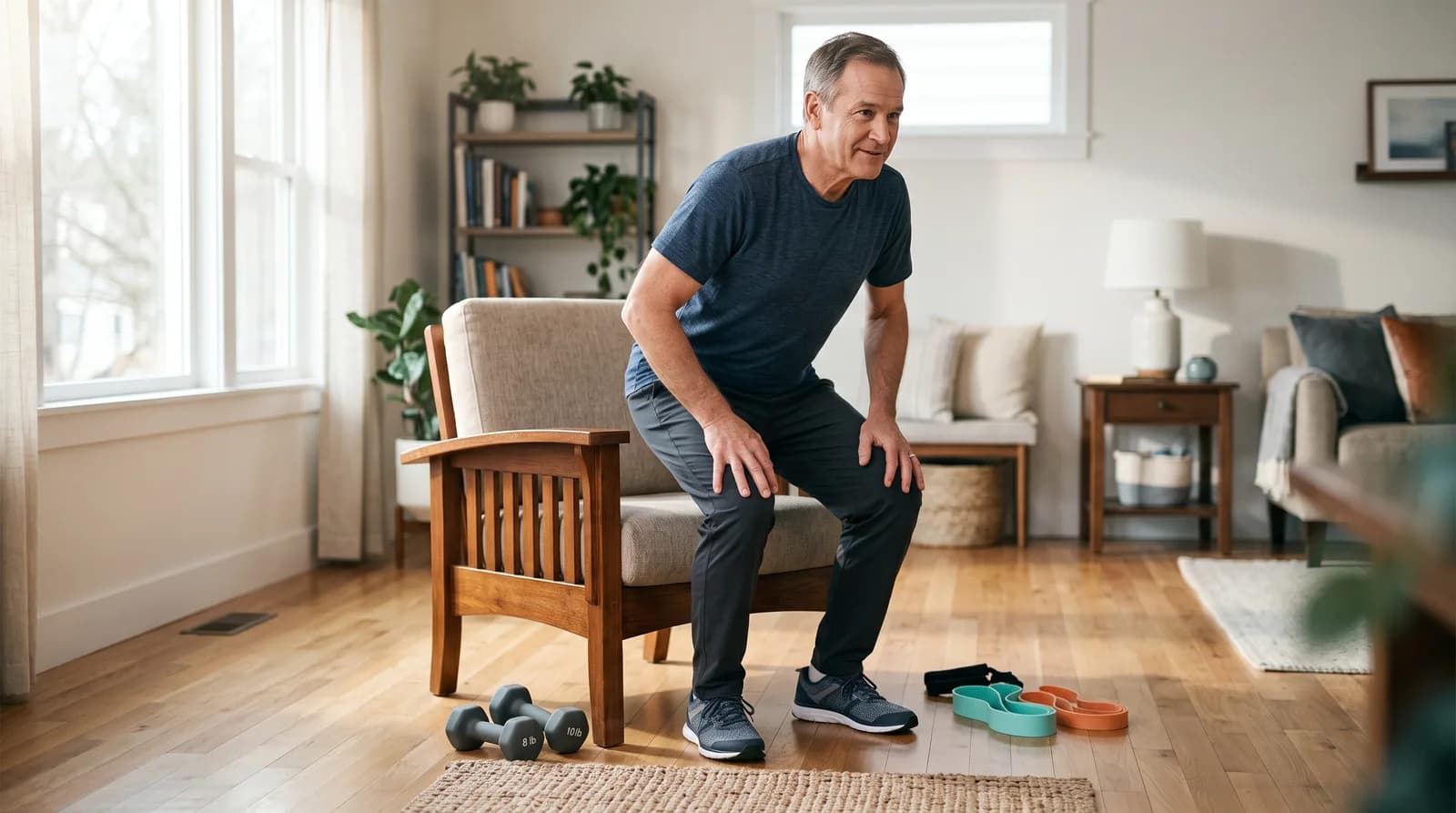
The images in this article were created with AI tools to illustrate concepts. They are not exact anatomical depictions or scientific evidence.
Be the first to like this
References
- Cruz-Jentoft AJ, Bahat G, Bauer J, et al. Sarcopenia: revised European consensus on definition and diagnosis. Age Ageing. 2019;48(1):16–31. doi:10.1093/ageing/afy169
- Mitchell WK, Williams J, Atherton P, Larvin M, Lund J, Narici M. Sarcopenia, dynapenia, and the impact of advancing age on human skeletal muscle size and strength; a quantitative review. Front Physiol. 2012;3:260. doi:10.3389/fphys.2012.00260
- Dent E, Morley JE, Cruz-Jentoft AJ, et al. International Clinical Practice Guidelines for Sarcopenia (ICFSR): screening, diagnosis and management. J Nutr Health Aging. 2018;22(10):1148–1161. doi:10.1007/s12603-018-1139-9
- Anker SD, Morley JE, von Haehling S. Welcome to the ICD-10 code for sarcopenia. J Cachexia Sarcopenia Muscle. 2016;7(5):512–514. doi:10.1002/jcsm.12147
- Fearon K, Evans WJ, Anker SD. Myopenia—a new universal term for muscle wasting. J Cachexia Sarcopenia Muscle. 2011;2(1):1–3. doi:10.1007/s13539-011-0025-7
- Clark BC, Manini TM. Sarcopenia =/= dynapenia. J Gerontol A Biol Sci Med Sci. 2008;63(8):829–834. doi:10.1093/gerona/63.8.829
- von Haehling S, Morley JE, Anker SD. An overview of sarcopenia: facts and numbers on prevalence and clinical impact. J Cachexia Sarcopenia Muscle. 2010;1(2):129–133. doi:10.1007/s13539-010-0014-2
- Petermann-Rocha F, Balntzi V, Gray SR, et al. Global prevalence of sarcopenia and severe sarcopenia: a systematic review and meta-analysis. J Cachexia Sarcopenia Muscle. 2022;13(1):86–99. doi:10.1002/jcsm.12783
- Beaudart C, Zaaria M, Pasleau F, Reginster JY, Bruyère O. Health outcomes of sarcopenia: a systematic review and meta-analysis. PLoS One. 2017;12(1):e0169548. doi:10.1371/journal.pone.0169548
- Studenski SA, Peters KW, Alley DE, et al. The FNIH sarcopenia project: rationale, study description, conference recommendations, and final estimates. J Gerontol A Biol Sci Med Sci. 2014;69(5):547–558. doi:10.1093/gerona/glu010
- Alley DE, Shardell MD, Peters KW, et al. Grip strength cutpoints for the identification of clinically relevant weakness. J Gerontol A Biol Sci Med Sci. 2014;69(5):559–566. doi:10.1093/gerona/glu011
- Cawthon PM, Peters KW, Shardell MD, et al. Cutpoints for low appendicular lean mass that identify older adults with clinically significant weakness. J Gerontol A Biol Sci Med Sci. 2014;69(5):567–575. doi:10.1093/gerona/glu023
- Liu CJ, Latham NK. Progressive resistance strength training for improving physical function in older adults. Cochrane Database Syst Rev. 2009;(3):CD002759. doi:10.1002/14651858.CD002759.pub2
- U.S. Department of Health and Human Services. Physical Activity Guidelines for Americans, 2nd edition. 2018.
- Bauer J, Biolo G, Cederholm T, et al. Evidence-based recommendations for optimal dietary protein intake in older people: a position paper from the PROT-AGE Study Group. J Am Med Dir Assoc. 2013;14(8):542–559. doi:10.1016/j.jamda.2013.05.021
Related articles
Why Muscle Matters for Your Health: A Simple Guide
Muscle does much more than move you. A plain-language guide to what muscle does for your body and the two things it needs to stay strong.
Oct 16, 2026 · 3 min readRead →
Muscle Is an Organ: What It Needs to Survive
Muscle does more than move you: it sends signals to other organs. Learn why that matters and the two inputs muscle needs as you age.
Oct 15, 2026 · 6 min readRead →