Why Muscle Matters for Your Health: A Simple Guide
By Vital Muscles · 2026-10-16 · 3 min read
Sources checked by the Vital Muscles editorial team on 2026-10-17. How we check
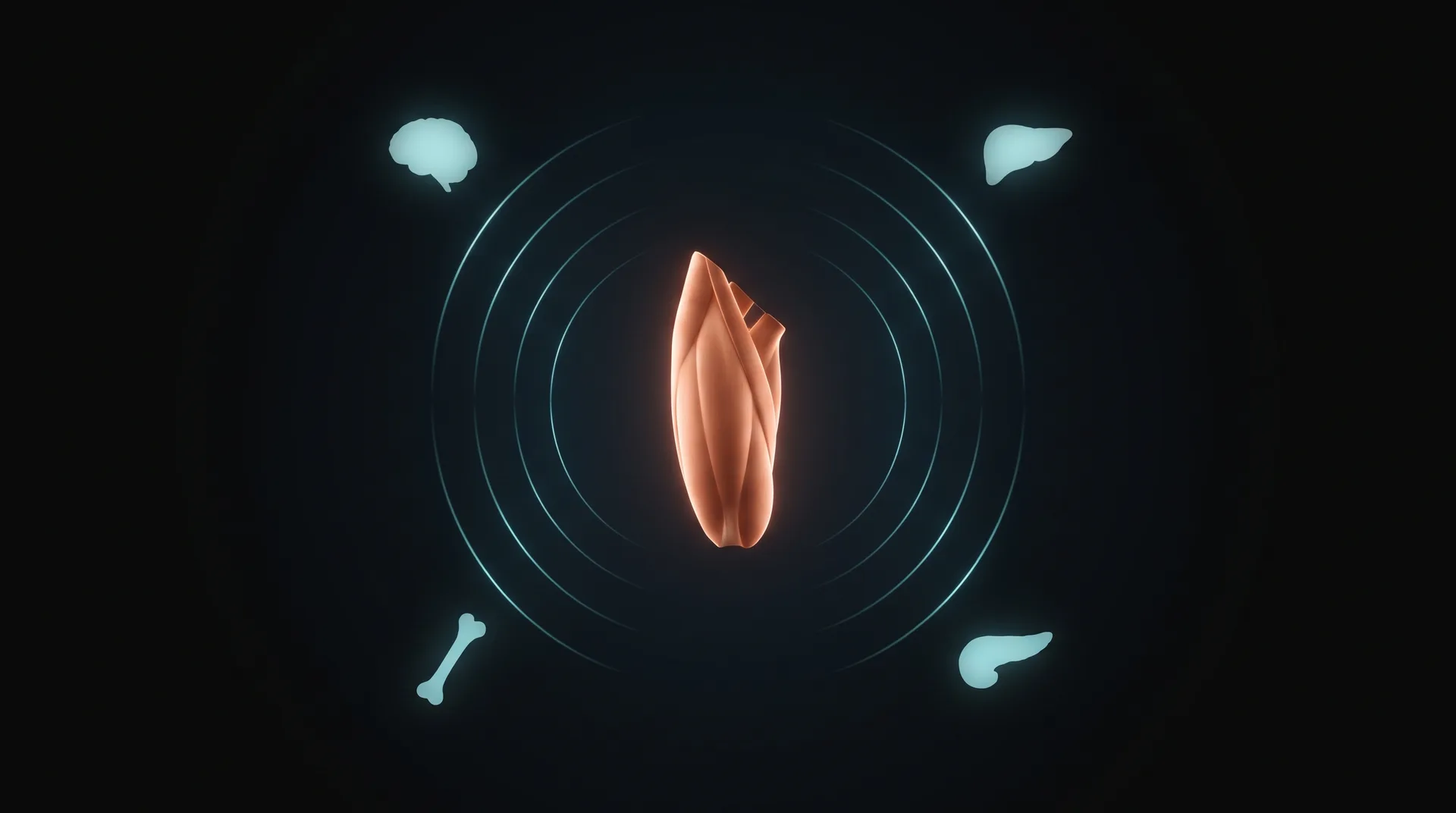
Most people think muscle is for moving, lifting and looking strong. It does all that, and a lot more. Here is a plain-language look at what your muscles do for you and what they need from you.
The short version
- Muscle sends chemical messages to other parts of your body.1
- It helps clear sugar from your blood after you eat.2
- It needs two things to stay strong: regular effort and enough protein.3,4
Muscle is more than a motor
For a long time, muscle was thought of as ropes and pulleys that move your body. Researchers now also describe muscle as an organ that sends signals. When muscles work, they release small proteins that can carry messages to other tissues, such as fat, liver, bone and brain.1
A note on the evidence
Most of what is known about these messengers comes from animal and cell studies. It is a promising area of research, not proof that any one of them prevents or treats disease in people.
Muscle and blood sugar
Muscle is the main place where your body puts away sugar from the blood. In lab studies that raise insulin, about 80% of the sugar your body takes up goes into muscle.2 That is one reason muscle is so important for blood sugar control.
Muscle and your nerves
Every muscle fiber is controlled by a nerve cell. As we age, we gradually lose some of these nerve cells, and researchers think this is a major reason muscle weakens with age.5 So muscle health and nerve health go together.
Two things your muscles need
1. Effort. Muscle is costly for your body to keep, so it needs a reason to stay. A load that challenges your muscles is one of the main signals researchers have identified for muscle growth.6 That is why strength training is a recommendation of its own, on top of walking or other cardio.3
2. Protein. Protein is made of building blocks called amino acids. Some of them your body can't make, so they must come from food. In human studies, these essential amino acids also switch on the process that builds new muscle.7 Think of it this way: effort is the work order, and protein is the delivery of materials.
What you can do this week
- Do strength exercises on at least 2 days a week, working all the big muscle groups.3 New to it? Start lighter and build up slowly.
- Make sure you eat enough protein overall. Expert groups recommend more protein for older adults, and the exact amount depends on your age and health.4 The details are in the detailed article below.
Before you change your diet or start training
If you have a medical condition, especially kidney disease, or you take regular medication, talk with your doctor or a registered dietitian before increasing protein or starting a new exercise program.4
Quick questions
Is muscle really an organ?
Researchers describe muscle as a secretory (endocrine) organ because it releases messengers that can act on other tissues. What each messenger does in people is still being worked out.1
How often should I do strength training?
At least 2 days a week, working all the big muscle groups.3 A simple way to start is in How to Start Strength Training: A Simple Beginner's Guide.
The bottom line
Muscle isn't just for athletes. It is working tissue that talks to your organs and depends on your nerves. Give it regular effort and enough protein, and start where you are.

The images in this article were created with AI tools to illustrate concepts. They are not exact anatomical depictions or scientific evidence.
Be the first to like this · 1 read
References
- Pedersen BK, Febbraio MA. Muscles, exercise and obesity: skeletal muscle as a secretory organ. Nat Rev Endocrinol. 2012;8(8):457–465. doi:10.1038/nrendo.2012.49
- DeFronzo RA, Tripathy D. Skeletal muscle insulin resistance is the primary defect in type 2 diabetes. Diabetes Care. 2009;32(Suppl 2):S157–S163. doi:10.2337/dc09-S302
- U.S. Department of Health and Human Services. Physical Activity Guidelines for Americans, 2nd edition. 2018.
- Bauer J, Biolo G, Cederholm T, et al. Evidence-based recommendations for optimal dietary protein intake in older people: a position paper from the PROT-AGE Study Group. J Am Med Dir Assoc. 2013;14(8):542–559. doi:10.1016/j.jamda.2013.05.021
- Larsson L, Degens H, Li M, et al. Sarcopenia: aging-related loss of muscle mass and function. Physiol Rev. 2019;99(1):427–511. doi:10.1152/physrev.00061.2017
- Schoenfeld BJ. The mechanisms of muscle hypertrophy and their application to resistance training. J Strength Cond Res. 2010;24(10):2857–2872. doi:10.1519/JSC.0b013e3181e840f3
- Drummond MJ, Dreyer HC, Fry CS, et al. Nutritional and contractile regulation of human skeletal muscle protein synthesis and mTORC1 signaling. J Appl Physiol. 2009;106(4):1374–1384. doi:10.1152/japplphysiol.91397.2008
Related articles

Losing Muscle as You Age: A Simple Guide to Sarcopenia
Sarcopenia is muscle loss with weakness, not just getting older. A plain-language guide to what it is, how it is checked and what helps.
Oct 16, 2026 · 4 min readRead →
What Is Sarcopenia? Muscle Loss, Strength and Diagnosis
Sarcopenia is more than muscle loss. Learn how it differs from dynapenia and myopenia, how doctors diagnose it, and what the research says helps.
Oct 16, 2026 · 8 min readRead →