Muscle Is an Organ: What It Needs to Survive
By Vital Muscles · 2026-10-15 · 6 min read
Sources checked by the Vital Muscles editorial team on 2026-10-16. How we check
This is the detailed version, with numbers and study details. Prefer the plain-language overview? Read the simple guide: Why Muscle Matters for Your Health: A Simple Guide
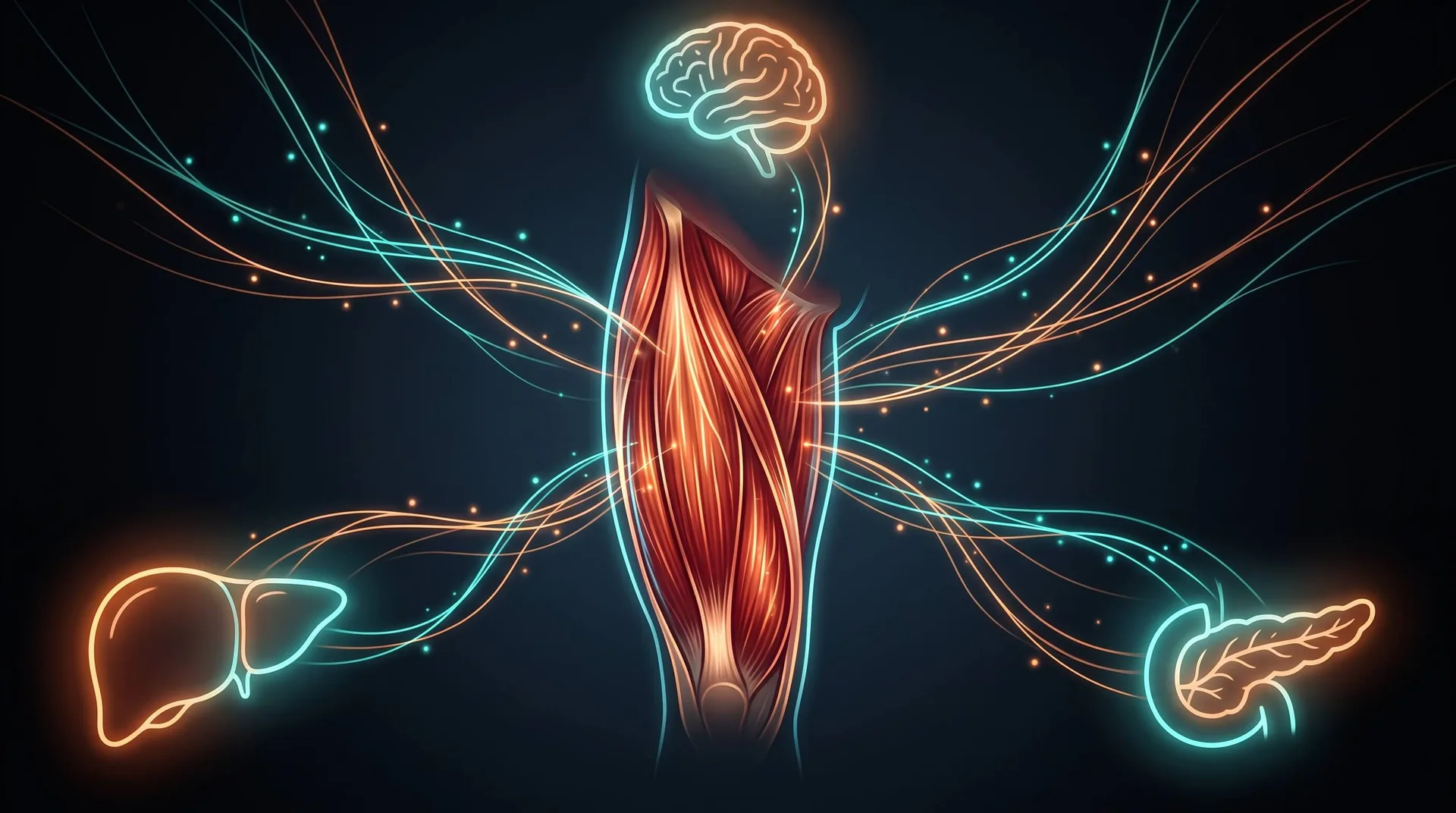
Ask most people what muscle is for and you'll hear the same three answers: moving, lifting things, and looking good in the mirror. All true — and all incomplete.
Key takeaways
- Skeletal muscle acts like a secretory (endocrine) organ: it releases signaling proteins that communicate with other tissues.1
- Researchers have proposed mechanical tension as one of the main drivers of muscle growth,2 and essential amino acids from protein also stimulate muscle protein synthesis.3
- U.S. guidelines recommend muscle-strengthening activity on at least two days per week.4
Muscle matters for far more than appearance or strength. It takes up blood sugar, it sends chemical messages to other organs, and it is tightly wired into your nervous system.
This article explains what muscle does, and the two inputs it needs.
Muscle is more than a motor
For a long time, muscle was thought of as a mechanical system — ropes and pulleys for movement and posture. Since the early 2000s, research has added a second job: muscle behaves like a secretory (endocrine) organ.1
When muscles contract, they release signaling proteins called myokines into the bloodstream. These messengers are thought to carry signals between muscle and other tissues, including fat, liver, pancreas, bone and brain.1
Two examples researchers study:
- Myonectin — in mouse and cell studies, this myokine lowered fatty acids circulating in the blood and increased fatty-acid uptake by liver and fat cells.5
- SPARC — a protein released by muscle during exercise. In mouse and cell studies, SPARC slowed the growth of colon cancer cells and promoted their death (apoptosis), and regular exercise reduced precancerous colon lesions in mice that had SPARC but not in mice that lacked it.6
A note on the evidence
Most of what is known about specific myokines comes from animal and cell studies. It's a promising area, not proof that any one myokine prevents or treats disease in people.
Pillar 1: Mechanical tension
Muscle is expensive to maintain. Your body is built to save energy, so it needs a reason to keep muscle tissue around.
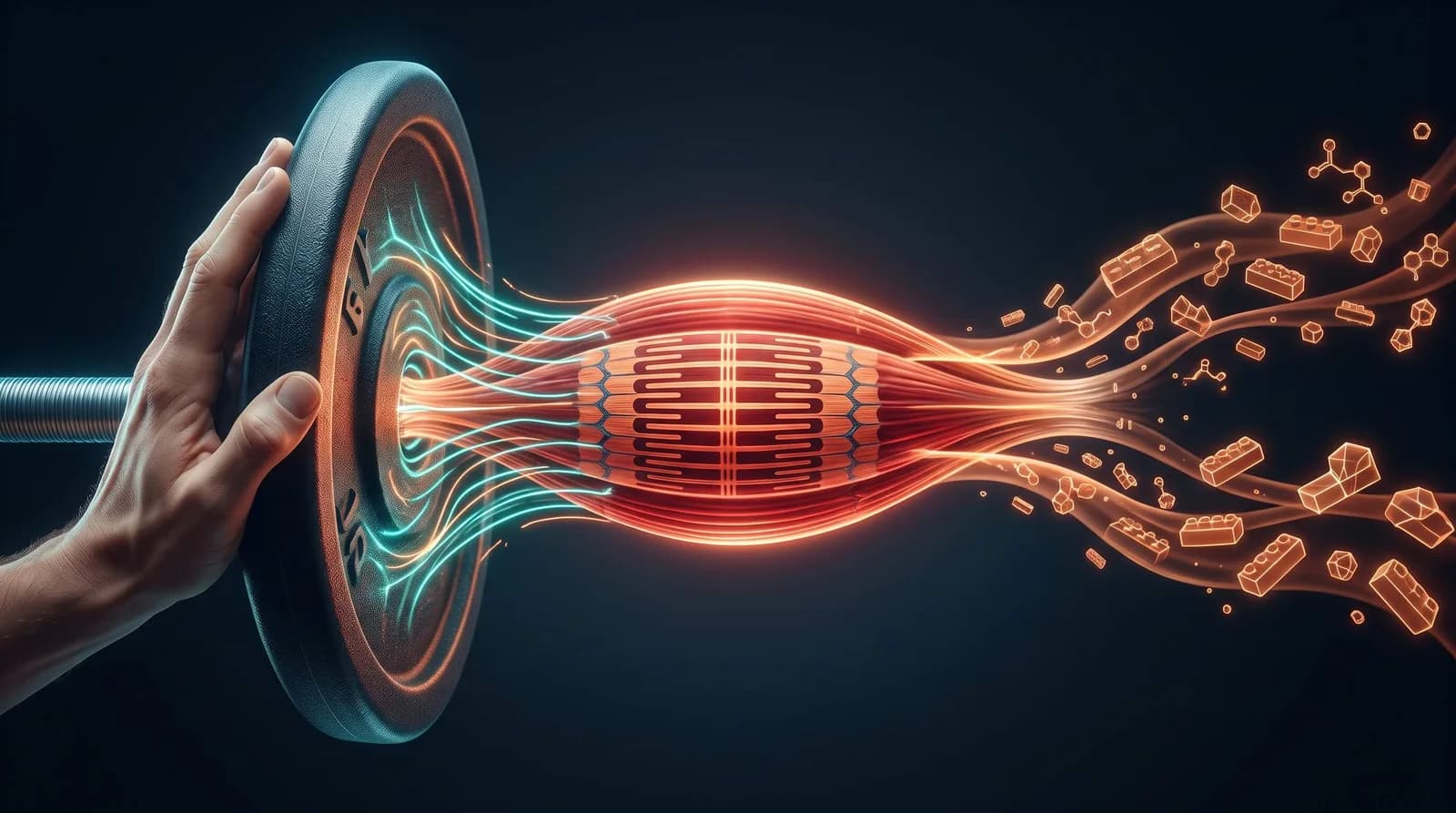
Researchers have proposed three main mechanisms for muscle growth: mechanical tension, muscle damage and metabolic stress.2 This article focuses on mechanical tension — a load heavy enough to challenge muscle fibers. Physiologists call the process of turning that physical strain into chemical signals mechanotransduction.
Walking, gardening and easy swimming are valuable for your heart. Official guidelines treat muscle-strengthening activity as its own recommendation, in addition to aerobic activity.4
Pillar 2: The right raw materials
A signal to build is useless without something to build with. That's the second pillar: protein and its building blocks, amino acids.
Essential amino acids can't be made by the body, so they have to come from food. Beyond serving as building blocks, they also act as a signal: in human studies, essential amino acids stimulate muscle protein synthesis — the process of building new muscle protein — in part through a signaling pathway called mTORC1.3
Think of it as a construction project: mechanical tension is the work order, and amino acids are the delivery of materials.
Why the nervous system matters
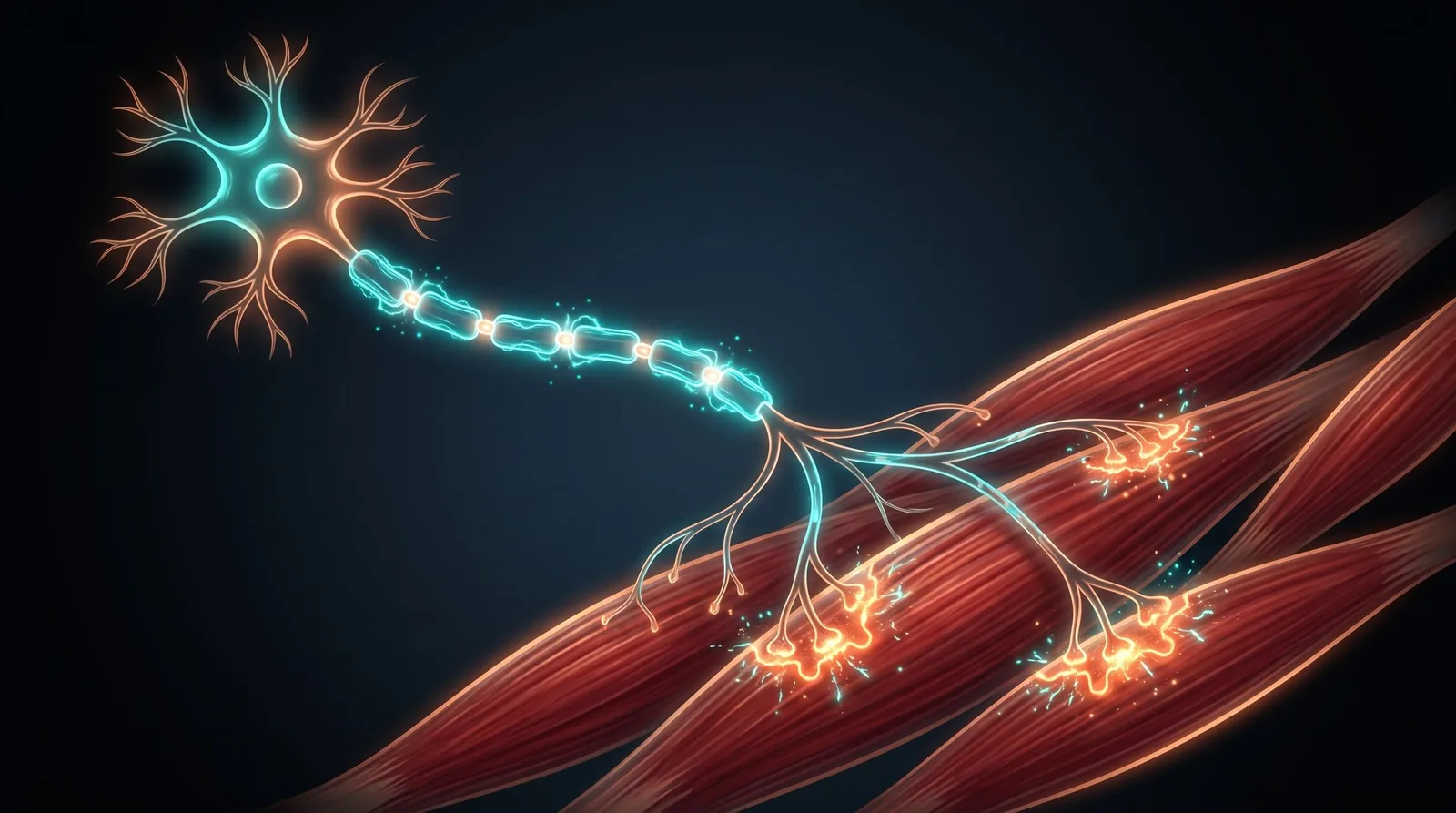
Muscle doesn't operate alone. Every muscle fiber is controlled by a motor neuron, and the pair — one neuron and the fibers it controls — is called a motor unit.
With aging, motor neurons are progressively lost, and the remaining ones don't fully make up for it by taking over the fibers left behind (a process called reinnervation). Researchers consider this a major contributor to age-related muscle loss.7 That's why muscle health and nervous-system health are closely linked.
Observational research links weaker grip strength with a higher risk of cognitive decline and dementia. A meta-analysis of 15 long-term studies found hazard ratios of about 2.0 for cognitive decline and about 1.5 for dementia among people with poorer grip strength.8 Because these are observational studies, they can't show that weak muscles cause the decline.
Muscle and blood sugar
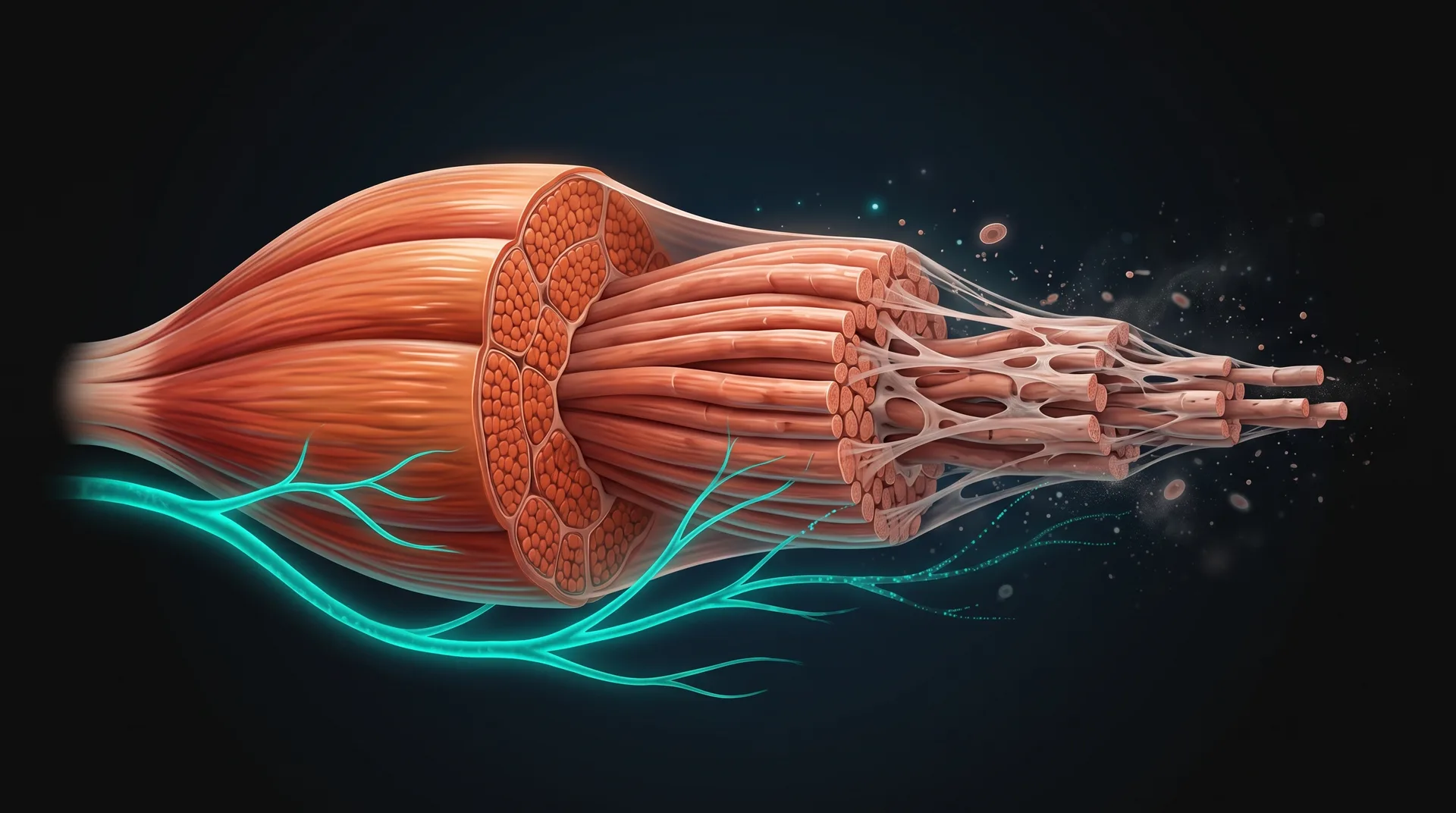
Skeletal muscle is the main tissue that takes up glucose when insulin is high: in laboratory studies that raise insulin, roughly 80% of glucose uptake happens in muscle. For that reason, insulin resistance in muscle is considered an early — possibly the initiating — defect in type 2 diabetes.9
Not every muscle fiber does the same job. In biopsies of human muscle, slow-twitch (Type I) fibers carried more of the proteins that handle glucose — including the insulin receptor and the GLUT4 transporter — than fast-twitch (Type II) fibers.10 The takeaway isn't that one type matters and the other doesn't; it's that muscle as a whole is metabolically active tissue.
What you can do this week
You don't need an elaborate plan to give your muscles the right signals:
- Do muscle-strengthening activity at least two days per week, involving all major muscle groups. This is the baseline in the U.S. Physical Activity Guidelines.4
- Aim for at least moderate effort. The guidelines call for muscle-strengthening activities of moderate or greater intensity.4 Use good technique, and start lighter if you're new.
- Make sure you're getting enough protein overall. For adults over 65, the PROT-AGE expert group recommends at least about 0.45–0.55 g of protein per pound of body weight per day (1.0–1.2 g per kilogram), and at least about 0.55 g per pound (1.2 g/kg) for those who exercise.11 For a 180-pound adult (about 82 kg), that works out to roughly 3 to 3.5 oz (80–100 g) of protein a day. That is the protein itself, not the weight of the food it comes in.
- Start where you are and progress gradually.
Before you change your diet or start training
The PROT-AGE paper notes an exception to higher protein intake: people with severe kidney disease. If you have a medical condition — especially kidney disease — or take regular medication, talk with your doctor or a registered dietitian before increasing protein or starting a new exercise program.
Frequently asked questions
Is muscle really an endocrine organ?
Researchers describe skeletal muscle as a secretory (endocrine) organ because it releases myokines that can act on other tissues.1 The role of individual myokines in humans is still being worked out.
How often should adults do strength training?
At least two days per week, involving all major muscle groups, at moderate or greater intensity, according to the U.S. Physical Activity Guidelines.4
How much protein do older adults need?
The PROT-AGE group recommends at least about 0.45–0.55 g of protein per pound of body weight per day (1.0–1.2 g per kilogram) for adults over 65, and at least about 0.55 g per pound (1.2 g/kg) for those who are exercising. Older adults with acute or chronic disease may need more, while people with severe kidney disease may need to limit protein.11 Individual needs vary, so check with your doctor or a registered dietitian.
The bottom line
Muscle isn't a luxury for athletes. It's working tissue that communicates with your organs and depends on your nervous system. Mechanical tension and good nutrition are the two inputs this article covered, and a practical starting point is the U.S. guideline of muscle-strengthening activity on at least two days per week.

The images in this article were created with AI tools to illustrate concepts. They are not exact anatomical depictions or scientific evidence.
Be the first to like this
References
- Pedersen BK, Febbraio MA. Muscles, exercise and obesity: skeletal muscle as a secretory organ. Nat Rev Endocrinol. 2012;8(8):457–465. doi:10.1038/nrendo.2012.49
- Schoenfeld BJ. The mechanisms of muscle hypertrophy and their application to resistance training. J Strength Cond Res. 2010;24(10):2857–2872. doi:10.1519/JSC.0b013e3181e840f3
- Drummond MJ, Dreyer HC, Fry CS, et al. Nutritional and contractile regulation of human skeletal muscle protein synthesis and mTORC1 signaling. J Appl Physiol. 2009;106(4):1374–1384. doi:10.1152/japplphysiol.91397.2008
- U.S. Department of Health and Human Services. Physical Activity Guidelines for Americans, 2nd edition. 2018.
- Seldin MM, Peterson JM, Byerly MS, Wei Z, Wong GW. Myonectin (CTRP15), a novel myokine that links skeletal muscle to systemic lipid homeostasis. J Biol Chem. 2012;287(15):11968–11980. doi:10.1074/jbc.M111.336834
- Aoi W, Naito Y, Takagi T, et al. A novel myokine, secreted protein acidic and rich in cysteine (SPARC), suppresses colon tumorigenesis via regular exercise. Gut. 2013;62(6):882–889. doi:10.1136/gutjnl-2011-300776
- Larsson L, Degens H, Li M, et al. Sarcopenia: aging-related loss of muscle mass and function. Physiol Rev. 2019;99(1):427–511. doi:10.1152/physrev.00061.2017
- Cui M, Zhang S, Liu Y, Gang X, Wang G. Grip strength and the risk of cognitive decline and dementia: a systematic review and meta-analysis of longitudinal cohort studies. Front Aging Neurosci. 2021;13:625551. doi:10.3389/fnagi.2021.625551
- DeFronzo RA, Tripathy D. Skeletal muscle insulin resistance is the primary defect in type 2 diabetes. Diabetes Care. 2009;32(Suppl 2):S157–S163. doi:10.2337/dc09-S302
- Albers PH, Pedersen AJ, Birk JB, et al. Human muscle fiber type-specific insulin signaling: impact of obesity and type 2 diabetes. Diabetes. 2015;64(2):485–497. doi:10.2337/db14-0590
- Bauer J, Biolo G, Cederholm T, et al. Evidence-based recommendations for optimal dietary protein intake in older people: a position paper from the PROT-AGE Study Group. J Am Med Dir Assoc. 2013;14(8):542–559. doi:10.1016/j.jamda.2013.05.021
Related articles

Losing Muscle as You Age: A Simple Guide to Sarcopenia
Sarcopenia is muscle loss with weakness, not just getting older. A plain-language guide to what it is, how it is checked and what helps.
Oct 16, 2026 · 4 min readRead →
What Is Sarcopenia? Muscle Loss, Strength and Diagnosis
Sarcopenia is more than muscle loss. Learn how it differs from dynapenia and myopenia, how doctors diagnose it, and what the research says helps.
Oct 16, 2026 · 8 min readRead →