Exercise and the Aging Brain: More Than Muscle
By Vital Muscles · 2026-11-06 · 5 min read
Sources checked by the Vital Muscles editorial team on 2026-10-30. How we check
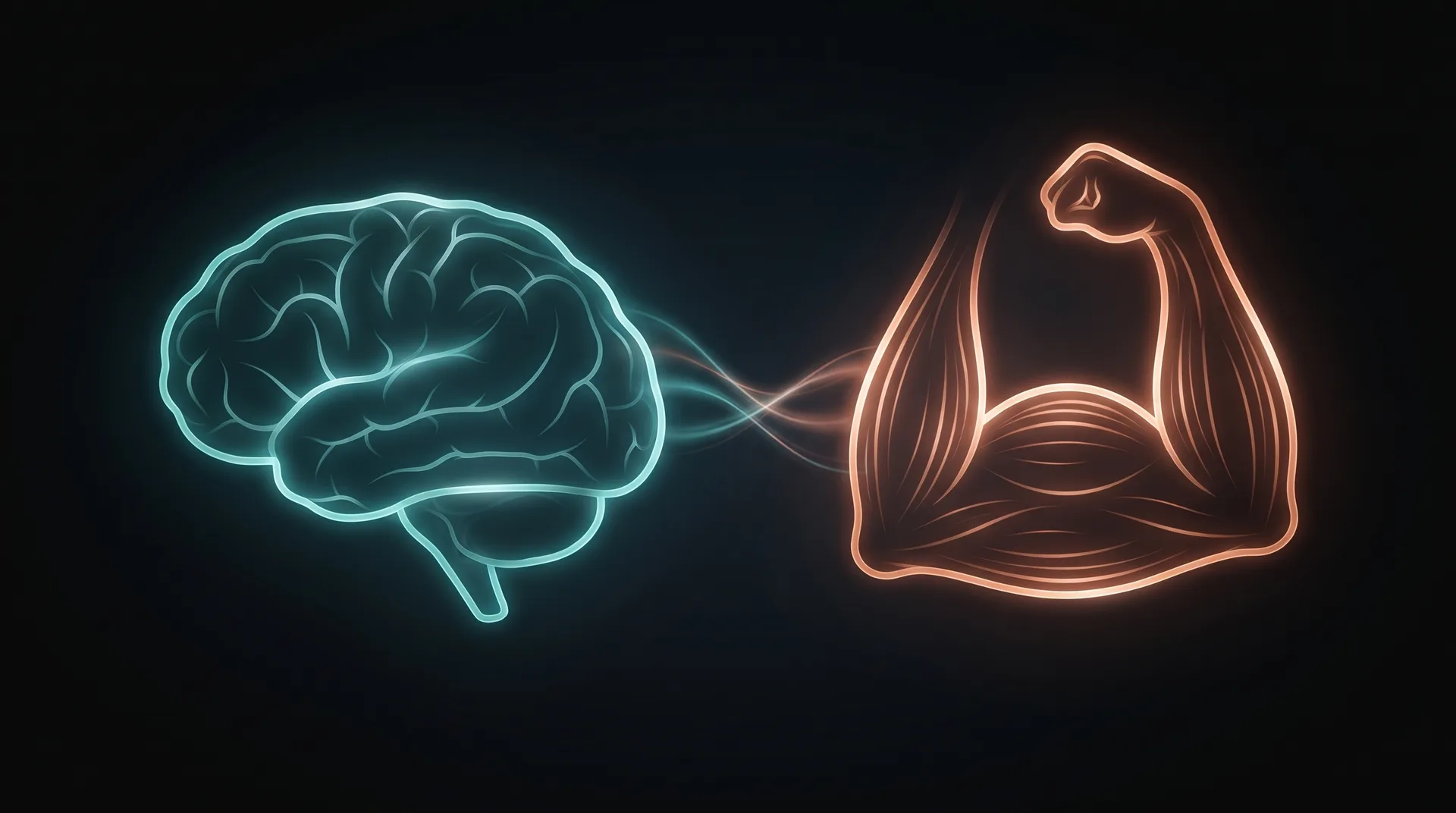
Exercise doesn't just work your muscles. It works your brain, too. In older adults, regular exercise, strength training included, is linked to sharper thinking and better memory in study after study.1,2,3 And you don't need heavy weights to get there.
We saw it up close. Here's the story, and what the research says about it.
Key takeaways
- Exercise helps thinking skills after 50. A review of 36 studies found a small but real improvement in cognition with aerobic, strength, combined and tai chi programs.1
- Strength training stands out. In a review of 44 trials, it had the strongest effect of any type of exercise.2
- There's no minimum to get started. Benefits began without a clear lower limit, and grew with more exercise.2
What we saw: two people in their 90s
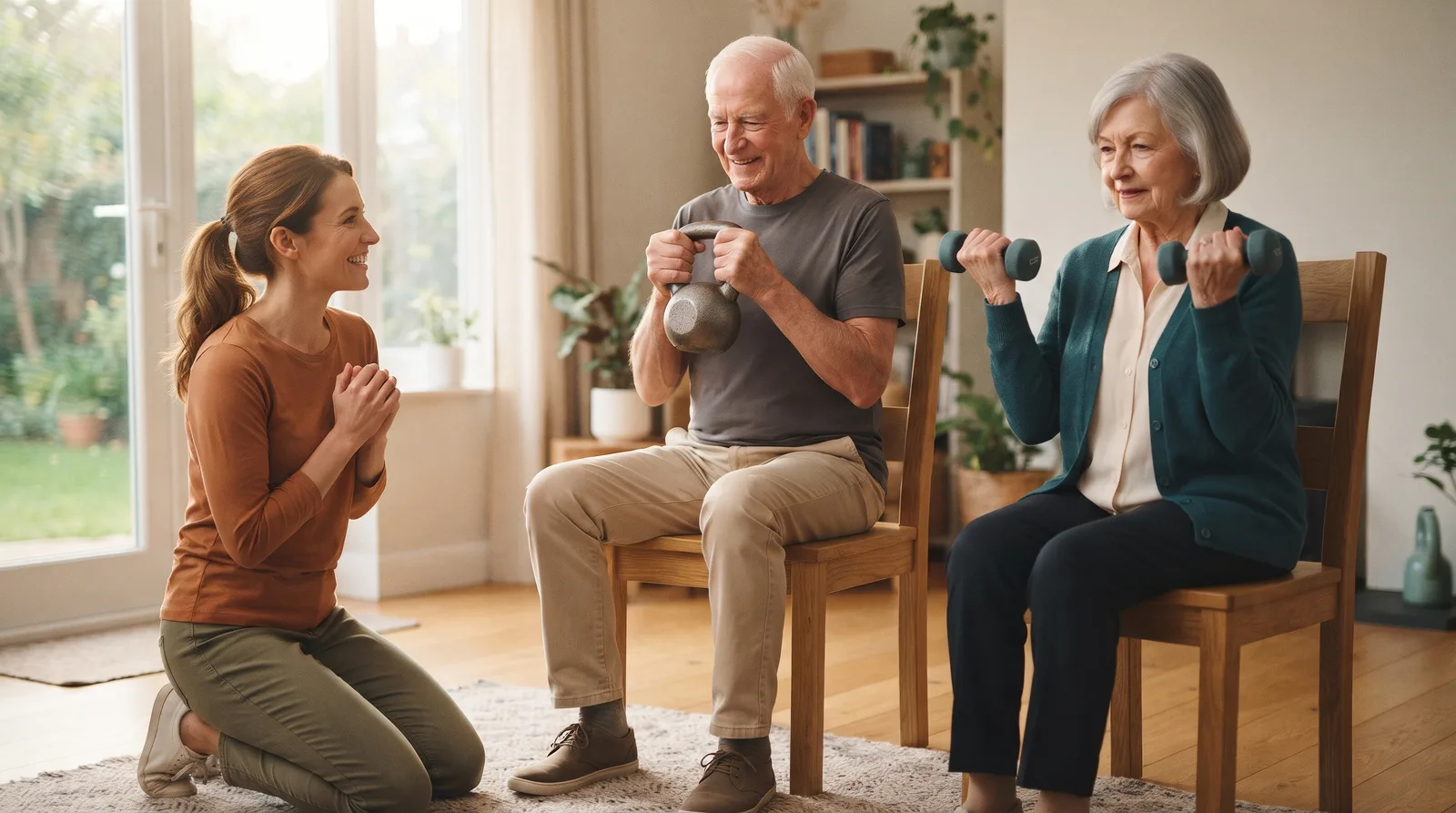
In 2020, during the COVID-19 lockdowns, our founder, who is also one of our trainers, started training their own grandparents, ages 93 and 95. The equipment was simple: an 8 lb kettlebell and dumbbells up to 14 lb.
Within about two weeks, they were stronger and moved more easily. That was expected. What surprised us was everything else. They seemed sharper. They remembered more, they talked more, and they carried themselves with more confidence. The change was obvious "as soon as I walked in the door."
Then lockdowns forced a break. After about a week without training, they seemed slower to think and talked less. When the sessions started again, the spark came back.
Later, both of them caught COVID-19. They spent about two weeks in bed and lost weight they couldn't afford to lose (they weighed about 132 lb or less). Both recovered and got back to their usual weight. The grandfather, who had started exercising at 94 on a bike and with 15 lb weights, went on to live to 100.
Our experience, not a study
This is a story about two people, watched by someone who loved them, with no tests or measurements. Changes in mood and alertness have many possible causes, including company, routine and attention. We can't say exercise caused what we saw, or that it helped them recover from COVID-19. But it's why we take the research below seriously.
What the research shows
Exercise improves thinking skills. In a review of 36 trials in adults over 50, exercise improved cognition by a small but meaningful amount. Aerobic exercise, strength training, combined programs and tai chi all helped.1
Strength training may help the most. A large review of 44 trials in adults 50 and older compared types of exercise. Strength training had the strongest effect on overall thinking skills, and the authors called it "a critical component" of programs for older adults.2
It helps with or without memory problems. In adults 60 and older, strength training improved overall thinking skills both in people with healthy minds and in people with cognitive impairment. Short-term memory improved in the healthy group.3
Memory and planning both benefit. Another review found small improvements in memory and in executive function (planning, focus and switching between tasks) in healthy older adults who exercised.4 The Physical Activity Guidelines for Americans also list better thinking skills and a lower risk of dementia among the benefits of regular activity.5
What “small” means here
These are average improvements across groups of people in studies. They're real, but modest, and no study shows that exercise prevents or cures dementia for any one person.
How much does it take?
Less than you might think.
- There's no clear minimum. In the 44-trial review, benefits started without a lower threshold and grew with more exercise.2
- Short, frequent sessions may work best. One review found that shorter sessions done more often were linked to bigger improvements, especially in people with cognitive impairment.4
- Moderate effort counts. In the 36-trial review, sessions of about 45 to 60 minutes at moderate or higher effort were linked to benefits.1
You don't need a gym. Light dumbbells, a kettlebell, resistance bands or your own body weight all give your muscles, and your brain, a reason to work.
What about getting sick?
We can't say whether training helped our trainer's grandparents recover from COVID-19. What we can say: in a study of more than 48,000 adults with COVID-19, people who were consistently inactive had more than twice the odds of being hospitalized compared with those who regularly met the activity guidelines.6 That's an observational link, not proof, and it doesn't replace vaccines or medical care.
How to start
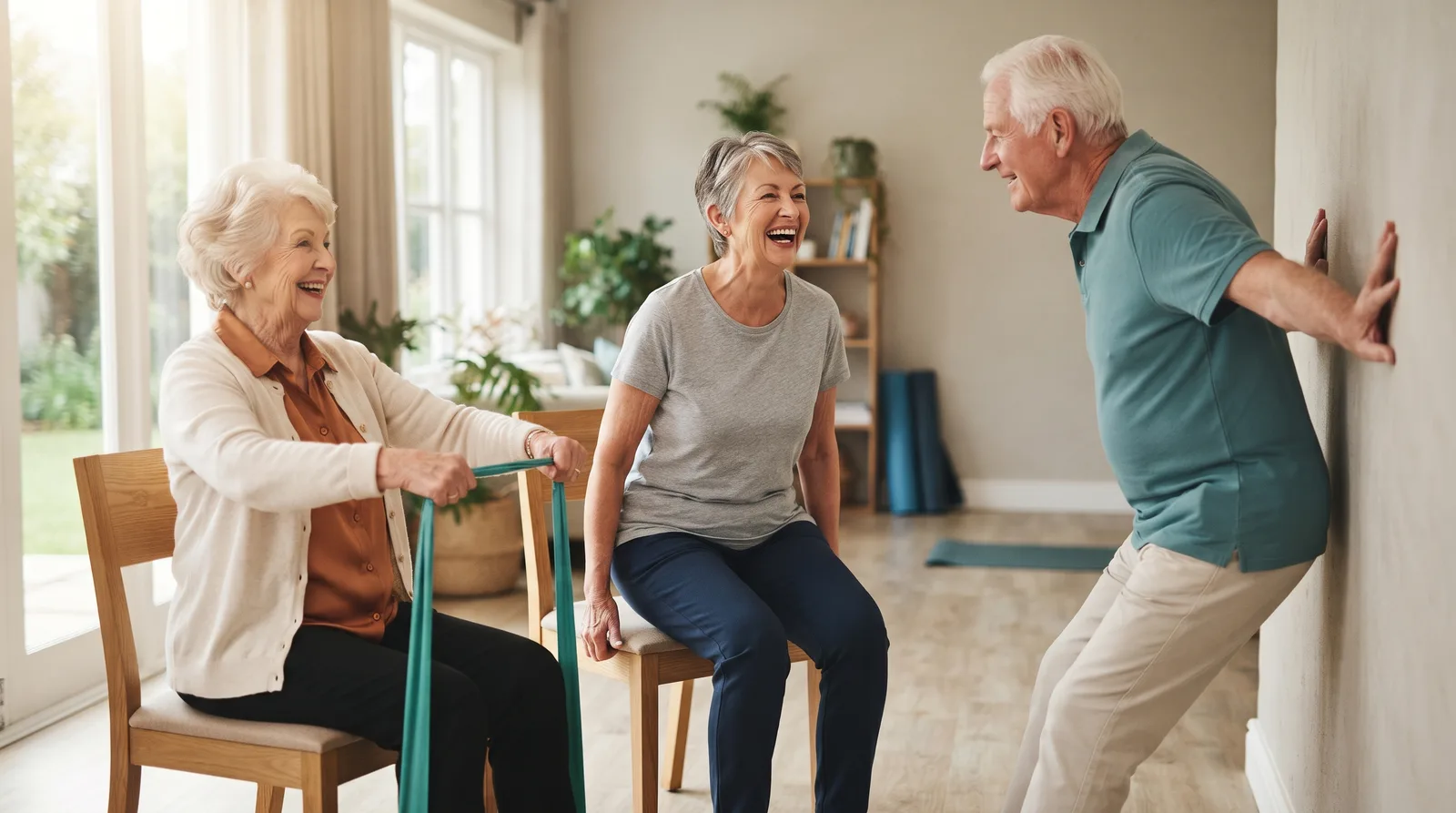
- Pick 2 or 3 days a week for simple strength exercises: sit-to-stands from a chair, wall push-ups, rows with a band or a light dumbbell.
- Start light. An 8 lb kettlebell was enough for two people in their 90s.
- Keep it social. Train with a partner, a grandchild or a group. Company is part of the fun.
- Be consistent. In our experience, what you keep doing matters more than how hard you go.
New to strength training? Start with our beginner home workout.
Check with your doctor first if…
You have a medical condition (such as heart disease, diabetes or memory problems), take regular medication, have chest pain or dizziness during activity, have had falls, or have been inactive for a long time. A doctor or physical therapist can help you choose a safe starting point.
Frequently asked questions
Can exercise prevent dementia?
The Physical Activity Guidelines for Americans list a lower risk of dementia among the benefits of regular activity.5 But no exercise program can guarantee that any one person won't develop it.
Is it too late to start in your 80s or 90s?
The studies we cite included adults 50, 60 and older, and strength training helped even people with cognitive impairment.3 Start light, and get your doctor's OK first.
Do I need heavy weights?
No. Strength training means making your muscles work against resistance. Light dumbbells, bands and body weight all count.
The bottom line
Exercise is a workout for your brain as much as your body. Strength training, even with light weights, is linked to sharper thinking in older adults, and you don't need much to start. We saw it in two people in their 90s. The research says it's worth a try at any age.
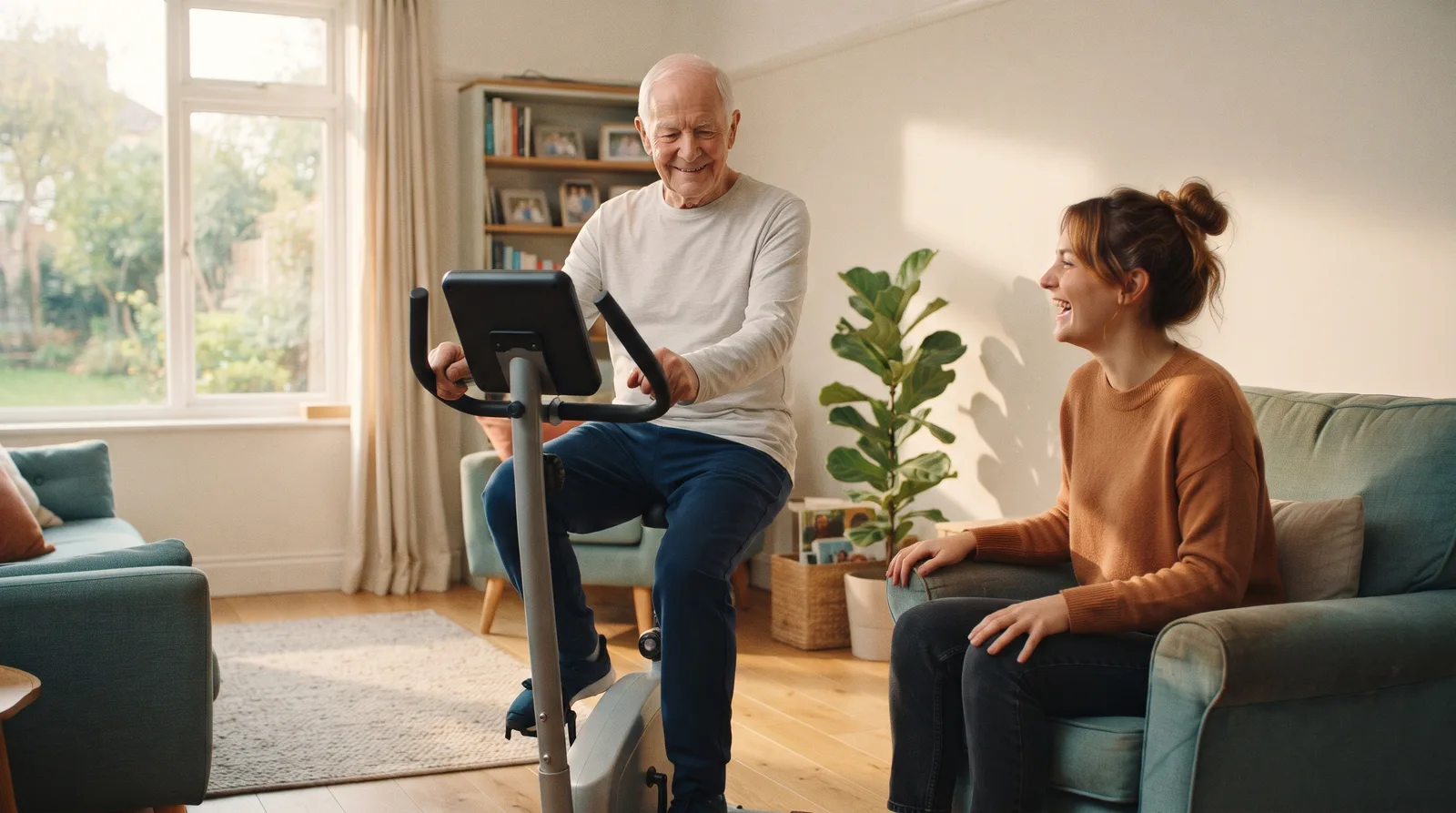
The images in this article were created with AI tools to illustrate concepts. They are not exact anatomical depictions or scientific evidence.
Be the first to like this · 10 reads
References
- Northey JM, Cherbuin N, Pumpa KL, Smee DJ, Rattray B. Exercise interventions for cognitive function in adults older than 50: a systematic review with meta-analysis. Br J Sports Med. 2018;52(3):154–160. doi:10.1136/bjsports-2016-096587
- Gallardo-Gómez D, del Pozo-Cruz J, Noetel M, et al. Optimal dose and type of exercise to improve cognitive function in older adults: a systematic review and bayesian model-based network meta-analysis of RCTs. Ageing Res Rev. 2022;76:101591. doi:10.1016/j.arr.2022.101591
- Coelho-Junior H, Marzetti E, Calvani R, et al. Resistance training improves cognitive function in older adults with different cognitive status: a systematic review and meta-analysis. Aging Ment Health. 2022;26(2):213–224. doi:10.1080/13607863.2020.1857691
- Sanders LMJ, Hortobágyi T, la Bastide-van Gemert S, van der Zee EA, van Heuvelen MJG. Dose-response relationship between exercise and cognitive function in older adults with and without cognitive impairment: a systematic review and meta-analysis. PLoS One. 2019;14(1):e0210036. doi:10.1371/journal.pone.0210036
- Piercy KL, Troiano RP, Ballard RM, et al. The Physical Activity Guidelines for Americans. JAMA. 2018;320(19):2020–2028. doi:10.1001/jama.2018.14854
- Sallis R, Young DR, Tartof SY, et al. Physical inactivity is associated with a higher risk for severe COVID-19 outcomes: a study in 48 440 adult patients. Br J Sports Med. 2021;55(19):1099–1105. doi:10.1136/bjsports-2021-104080
Related articles
Why Muscle Matters for Your Health: A Simple Guide
Muscle does much more than move you. A plain-language guide to what muscle does for your body and the two things it needs to stay strong.
Oct 16, 2026 · 3 min readRead →
Losing Muscle as You Age: A Simple Guide to Sarcopenia
Sarcopenia is muscle loss with weakness, not just getting older. A plain-language guide to what it is, how it is checked and what helps.
Oct 16, 2026 · 4 min readRead →
Muscle Is an Organ: What It Needs to Survive
Muscle does more than move you: it sends signals to other organs. Learn why that matters and the two inputs muscle needs as you age.
Oct 15, 2026 · 6 min readRead →