Benefits of Strength Training: What the Research Shows
By Vital Muscles · 2026-11-04 · 6 min read
Sources checked by the Vital Muscles editorial team on 2026-10-29. How we check
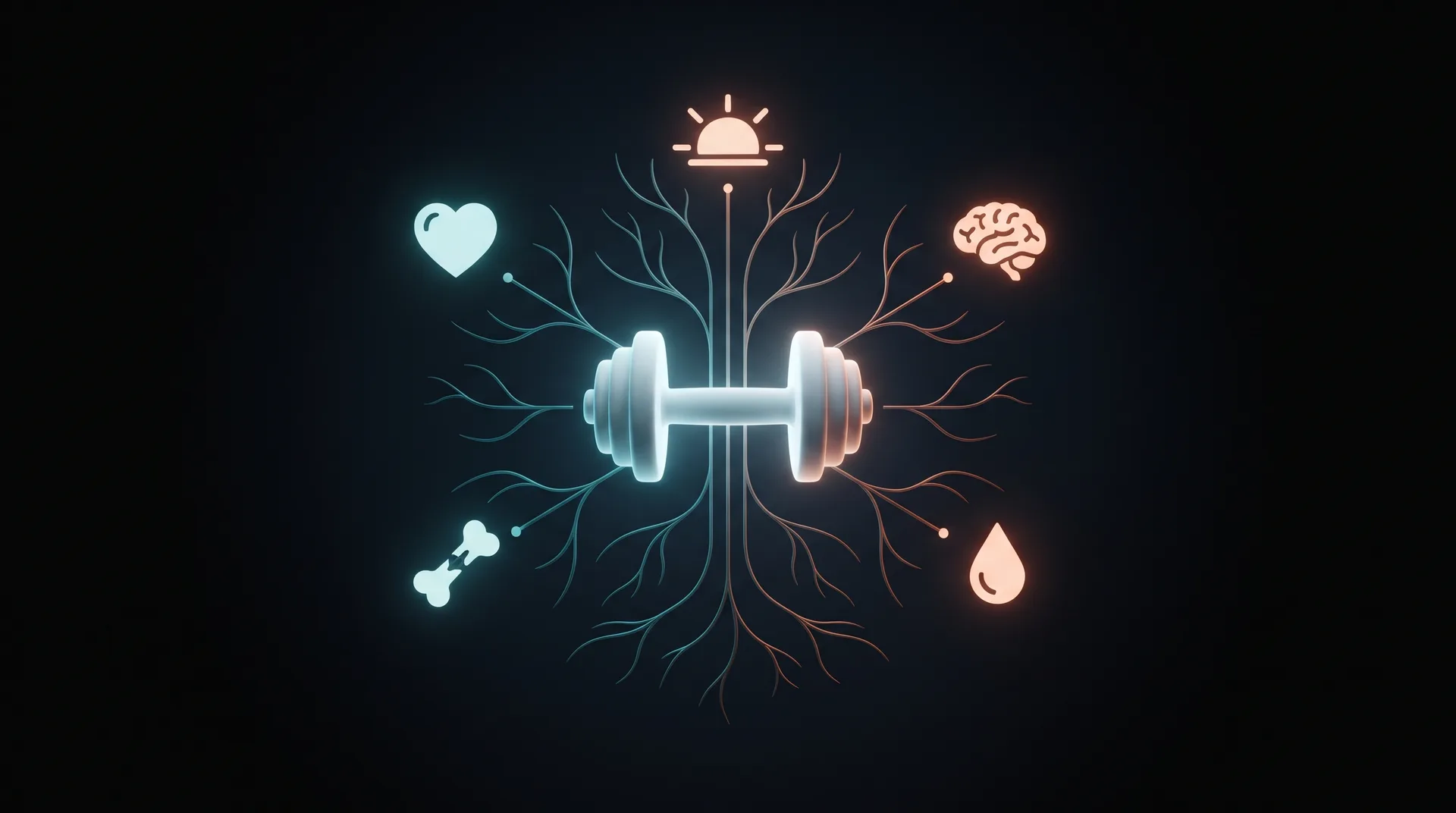
Strength training does a lot more than build bigger muscles. Lifting weights, using resistance bands or doing bodyweight exercises is linked to a longer life, lower risk of several diseases, better mood and an easier time with everyday tasks. It has limits, too, so we separate what the studies show from what they don't.
Key takeaways
- Longer, healthier life: in large studies that followed people for years, strength training was linked to roughly 10–17% lower risk of early death, heart disease and type 2 diabetes.1
- Stronger body, better mood: in trials, it improved strength and function in older adults2 and eased symptoms of depression.3
- The minimum: U.S. guidelines recommend strength training on at least 2 days a week.4
It keeps you strong and independent
The most direct benefit is the one you'd expect. A Cochrane review of 121 trials with about 6,700 older adults found that resistance training had a large effect on muscle strength, a small but significant improvement in physical function, a modest improvement in gait speed and a moderate-to-large improvement in getting out of a chair.2 The CDC adds that strength training helps adults build or keep muscle and strength, and protects bones, joints and muscles as we age.5

Lower risk of disease and early death
Most of this evidence comes from cohort studies, which follow large groups of people over time. A meta-analysis of 16 of them found that strength training was linked to roughly 10–17% lower risk of death from any cause, heart disease and type 2 diabetes. It was also linked to lower risk of cancer overall and of lung cancer, but not of colon, kidney, bladder or pancreatic cancer.1
Another pooled analysis of 80,306 adults in England and Scotland found that any strength-promoting exercise was associated with 23% lower all-cause mortality and 31% lower cancer mortality. Adults who met both the aerobic and the strength guidelines had 29% lower all-cause mortality.6
The good news? You don't need hours of it. In the meta-analysis, the biggest risk reduction (about 10–20% for death from any cause, heart disease and cancer overall) showed up at roughly 30–60 minutes of strength training a week. For diabetes, the benefit kept growing up to about 60 minutes a week.1
Associations, not guarantees
These are observational studies. People who strength-train may differ from those who don't in ways researchers can't fully account for, so the results show links, not proof that strength training caused the lower risk.
Blood pressure and blood sugar: some effects, with limits
Blood pressure. A meta-analysis of 28 randomized trials with 1,012 participants found that resistance training lowered systolic and diastolic blood pressure by about 3.9 mm Hg in groups with normal or borderline-high blood pressure. In the five groups of people with high blood pressure, the drops weren't statistically significant. The trials also found no significant effect on fasting blood sugar or most blood lipids, although triglycerides fell slightly.7
Type 2 diabetes. A meta-analysis of 20 studies with 1,172 adults with type 2 diabetes found that resistance training lowered HbA1c (a measure of average blood sugar) by about 0.4 percentage points compared with controls. Larger gains in strength were associated with larger reductions, and the effect was not significantly different from aerobic training. Results varied a lot between studies.8
Mood and thinking
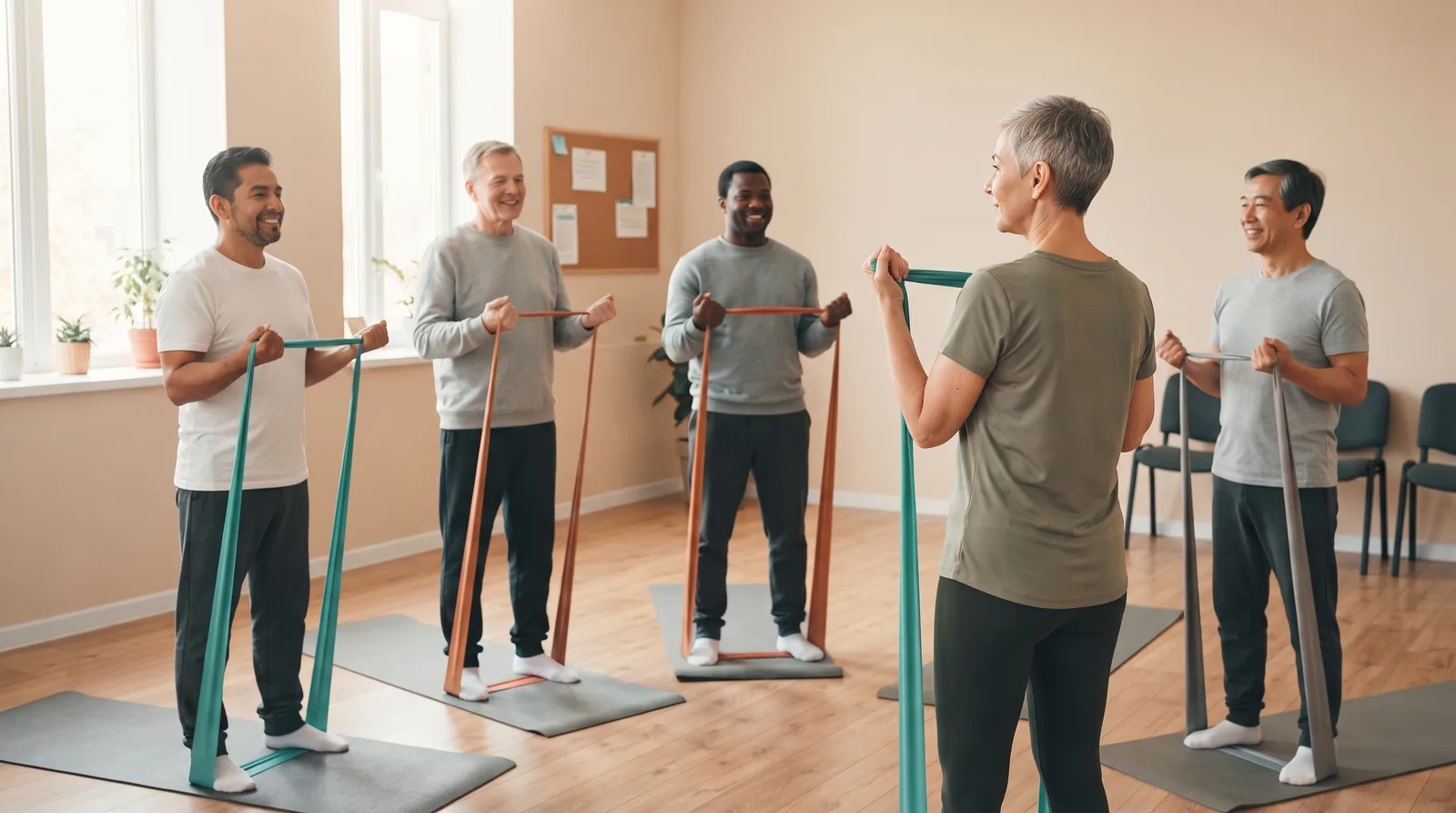
Depression. A meta-analysis of 33 randomized trials with 1,877 participants found that resistance training reduced depressive symptoms, with a moderate average effect. The studies varied a lot, and better-blinded trials showed smaller drops, so the authors called for higher-quality research.3
Cognition. A meta-analysis of 24 studies found positive effects of resistance exercise on cognition overall, including overall cognitive scores and executive functions (planning and mental flexibility), but not on working memory. Results varied widely between studies.9
Bones: small changes, possibly protective
The evidence for bones is more modest. A meta-analysis of 7 studies with 370 older adults found small changes in bone mineral density with resistance training: about +0.6% at the hip and the spine and about −0.2% at the femoral neck. The authors concluded that this suggests, at most, a preventive effect against fragile bones.10 Think of strength training as one piece of bone health, not a treatment for osteoporosis on its own.
Sarcopenia: the main treatment
For age-related muscle loss, international clinical guidelines strongly recommend resistance-based exercise as the main treatment.11 We explain the condition in What Is Sarcopenia? and why muscle matters in Muscle Is an Organ: What It Needs to Survive.
What the evidence can't tell us
- Many results come from observational studies and can't prove cause and effect.
- Results vary a lot between trials. Several of the meta-analyses above report high heterogeneity.
- Not every outcome improves. For example, blood pressure didn't drop significantly in people with high blood pressure, and most cancers weren't linked to strength training.
- Safety data are incomplete. In the Cochrane review of older adults, adverse events were poorly recorded: joint pain and muscle soreness were reported in many studies that tracked them, and serious events were rare.2
How much do you need?
The U.S. guidelines recommend strength training on at least 2 days a week, on top of aerobic activity.4 In one pooled analysis, adults who met both guidelines had the lowest mortality (a hazard ratio of 0.71, compared with 0.84 for aerobic activity alone).6 We cover the full weekly picture in How Much Exercise Do Adults Need? The U.S. Guidelines.
Check with your doctor first if…
You have a medical condition (such as heart disease, high blood pressure, diabetes or osteoporosis), are pregnant, have joint or back problems, have chest pain or dizziness during activity, or have been inactive for a long time. A doctor or other qualified professional can help you choose a safe way to start.
Frequently asked questions
Does strength training lower the risk of dying?
In large studies that followed people for years, it was linked to roughly 10–17% lower risk of death from any cause.1 Because the studies are observational, they show a link, not proof of cause and effect.
Is strength training better than cardio?
It's not either-or: the guidelines recommend both. In one pooled analysis, adults who met both the aerobic and the strength guidelines had lower mortality than those who met only the aerobic one.6
Can strength training help with depression?
A meta-analysis of randomized trials found that resistance training reduced depressive symptoms, though the studies varied and the authors asked for better-designed trials.3 It isn't a replacement for professional care.
Is it safe for older adults?
Generally, yes. Serious problems were rare in a Cochrane review of older adults, but muscle soreness and joint pain were common in the studies that tracked them.2 Start gradually, and get guidance if you have a health condition.
The bottom line
Strength training is linked to stronger muscles, better function as you age, lower risk of several chronic diseases and a better mood. Some benefits have stronger evidence than others, and some effects are small. Two days a week, on top of aerobic activity, is the guideline minimum.

The images in this article were created with AI tools to illustrate concepts. They are not exact anatomical depictions or scientific evidence.
Be the first to like this · 7 reads
References
- Momma H, Kawakami R, Honda T, et al. Muscle-strengthening activities are associated with lower risk and mortality in major non-communicable diseases: a systematic review and meta-analysis of cohort studies. Br J Sports Med. 2022;56(13):755–763. doi:10.1136/bjsports-2021-105061
- Liu CJ, Latham NK. Progressive resistance strength training for improving physical function in older adults. Cochrane Database Syst Rev. 2009;(3):CD002759. doi:10.1002/14651858.CD002759.pub2
- Gordon BR, McDowell CP, Hallgren M, et al. Association of efficacy of resistance exercise training with depressive symptoms: meta-analysis and meta-regression analysis of randomized clinical trials. JAMA Psychiatry. 2018;75(6):566–576. doi:10.1001/jamapsychiatry.2018.0572
- Piercy KL, Troiano RP, Ballard RM, et al. The Physical Activity Guidelines for Americans. JAMA. 2018;320(19):2020–2028. doi:10.1001/jama.2018.14854
- Centers for Disease Control and Prevention. Benefits of Physical Activity. Physical Activity Basics. Page dated December 4, 2025.
- Stamatakis E, Lee IM, Bennie J, et al. Does strength-promoting exercise confer unique health benefits? A pooled analysis of data on 11 population cohorts with all-cause, cancer, and cardiovascular mortality endpoints. Am J Epidemiol. 2018;187(5):1102–1112. doi:10.1093/aje/kwx345
- Cornelissen VA, Fagard RH, Coeckelberghs E, Vanhees L. Impact of resistance training on blood pressure and other cardiovascular risk factors: a meta-analysis of randomized, controlled trials. Hypertension. 2011;58(5):950–958. doi:10.1161/HYPERTENSIONAHA.111.177071
- Jansson AK, Chan LX, Lubans DR, Duncan MJ, Plotnikoff RC. Effect of resistance training on HbA1c in adults with type 2 diabetes mellitus and the moderating effect of changes in muscular strength: a systematic review and meta-analysis. BMJ Open Diabetes Res Care. 2022;10(2):e002595. doi:10.1136/bmjdrc-2021-002595
- Landrigan JF, Bell T, Crowe M, et al. Lifting cognition: a meta-analysis of effects of resistance exercise on cognition. Psychol Res. 2020;84(5):1167–1183. doi:10.1007/s00426-019-01145-x
- Massini DA, Nedog FH, de Oliveira TP, et al. The effect of resistance training on bone mineral density in older adults: a systematic review and meta-analysis. Healthcare (Basel). 2022;10(6):1129. doi:10.3390/healthcare10061129
- Dent E, Morley JE, Cruz-Jentoft AJ, et al. International Clinical Practice Guidelines for Sarcopenia (ICFSR): screening, diagnosis and management. J Nutr Health Aging. 2018;22(10):1148–1161. doi:10.1007/s12603-018-1139-9
Related articles

Strength Training for Beginners: How to Start Safely
How often, how many reps, how hard and how to progress when you start strength training, based on U.S. guidelines, NIA and ACSM. Plus safety tips.
Oct 29, 2026 · 5 min readRead →

How Much Exercise Do Adults Need? The U.S. Guidelines
Two weekly goals: about 30 minutes of moderate activity on 5 days, plus strength training on 2 days. Here is what counts and how to fit both in.
Oct 27, 2026 · 6 min readRead →
Why Exercise Matters: What the Evidence Says
Regular exercise lowers the risk of heart disease, diabetes and some cancers and helps mood and sleep. Here is what U.S. guidelines and research say.
Oct 16, 2026 · 6 min readRead →